U.N. and Britain Denounce Israeli Attack in Gaza That Killed U.N. Workers
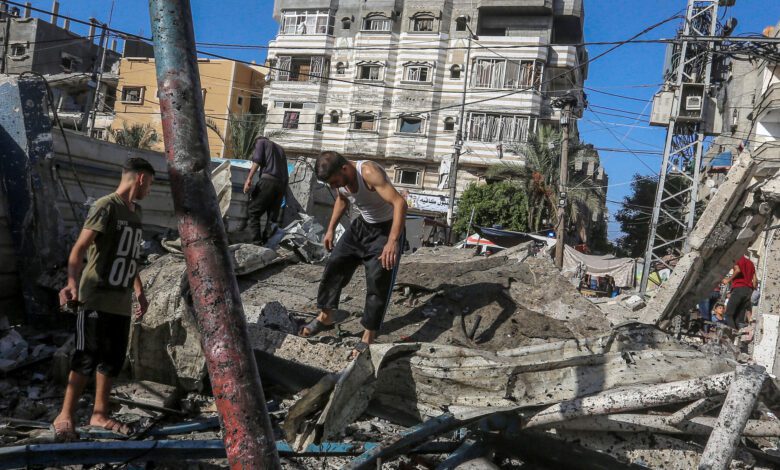
The United Nations and British government condemned an Israeli strike on the Al-Jaouni school in central Gaza on September 11, 2024. UNRWA said six of its employees were among at least 18 people killed at the school, which sheltered displaced families.
The building was in Nuseirat
The UN-run school had been converted into a shelter during the war and was reportedly housing about 12,000 displaced people. UN officials said it had been struck several times before.
Civilians repeatedly displaced by fighting had few places they could regard as safe.
Six UNRWA workers were reported killed
The agency said the dead included the shelter manager and staff who had been helping families. It described the event as the highest number of its personnel killed in a single incident during the conflict up to that point.
Their protected status did not remove the need for an independent examination of circumstances.
Israel said it targeted militants
The Israeli military said it conducted a precise strike against a Hamas command-and-control centre operating in a compound that had previously served as a school. It later named people it alleged were militants.
UNRWA disputed aspects of the account and said claims about staff required evidence and due process.
The reported toll included civilians
Gaza emergency officials and UN reporting said women and children were among those killed and that dozens were injured. Exact casualty information in an active war can change as hospitals and families identify victims.
Responsible reporting attributes each figure and avoids treating an early estimate as final.
Britain demanded protection for aid workers
The United Kingdom’s representative at the UN Security Council condemned the deaths and said humanitarian personnel must be able to work safely. Britain also repeated calls for an immediate ceasefire and release of hostages.
Those positions combined criticism of the strike with demands directed at Hamas.
International humanitarian law applies
Parties must distinguish civilians from combatants and take feasible precautions to minimize civilian harm. Civilian buildings may lose protection if used for military purposes, but that does not eliminate proportionality and warning obligations.
A school full of displaced people presents an especially grave foreseeable risk.
UN facilities require effective coordination
Aid agencies routinely share locations with parties to conflict to reduce accidental attacks. Repeated damage to marked facilities raises questions about the quality of deconfliction, intelligence and operational review.
Notification alone cannot protect a site if information is ignored or outdated.
Competing claims should be investigated
A credible inquiry would examine target intelligence, weapon choice, timing, warnings, identities of those killed and knowledge of the shelter population. Public conclusions should distinguish proven facts from allegations.
Investigations also need access to witnesses and physical evidence.
The human consequences extended beyond the toll
Survivors lost relatives, shelter and aid providers at once. Damage to schools also delays education and weakens the humanitarian network on which displaced communities depend.
The verified core of the report was stark: a strike hit a UN-administered shelter, UNRWA reported six staff among at least 18 dead, Israel said it targeted militants, and international officials demanded accountability and protection. Presenting all four elements is essential to a truthful account.