Delhi-NCR Pollution Checks Intensify Before the Winter Air Crisis

NEW DELHI, October 3, 2026 — The Commission for Air Quality Management has reviewed enforcement across Delhi and the National Capital Region as officials prepare for the annual rise in winter pollution.
Enforcement teams conducted 197 inspections during the September 8–24 reporting period, including 111 industrial units, 76 diesel generator sets and 10 construction and demolition sites, according to an official review reported by Akashvani and Hindustan Times. Twenty-two special inspection drives were also conducted. These figures describe checks, not proof that every inspected site violated a rule.
Why the timing matters
Delhi-NCR pollution typically worsens when cooler temperatures and weak winds trap emissions closer to the ground. Road dust, vehicles, construction, industry, diesel generators, waste burning and regional agricultural fires can all contribute. Their relative shares change by day and location, so a single-source explanation is usually incomplete.
The Graded Response Action Plan links escalating measures to air-quality conditions. Enforcement before severe episodes is intended to reduce avoidable emissions rather than wait until emergency restrictions are required. The commission’s powers include directions to state pollution-control bodies and prosecution in cases of serious non-compliance.
Inspection must lead to measurable compliance
The value of a drive depends on what happens after a violation is found. Useful public reporting would state how many notices, closures or penalties followed; whether pollution-control equipment was operating; and whether repeat offenders corrected problems. An inspection total alone cannot show the amount of pollution prevented.
Construction sites can reduce dust with covered transport, barriers and proper handling of debris. Industrial units must use permitted fuels and functional emission controls. Generator restrictions require reliable electricity and lawful backup arrangements for essential services.
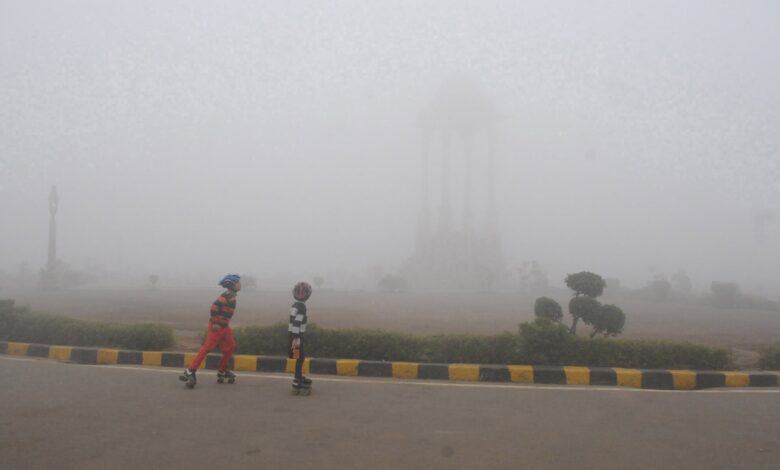
For residents, an archive photograph of haze or fog is not evidence of today’s air quality. Current decisions should use official station data and health advisories. People with asthma, heart disease, older adults, children and outdoor workers can face greater risk during high-pollution episodes.
The coming weeks will test whether early enforcement changes behaviour before the most stagnant weather arrives. Transparent follow-up—rather than the number of teams deployed—will be the clearest measure of success.
Archive photograph: low visibility at India Gate in December 2010; not current conditions. Ministry of Environment/PIB, GODL-India.