US Caribbean Boat Strike Kills Four as Legal Scrutiny Grows

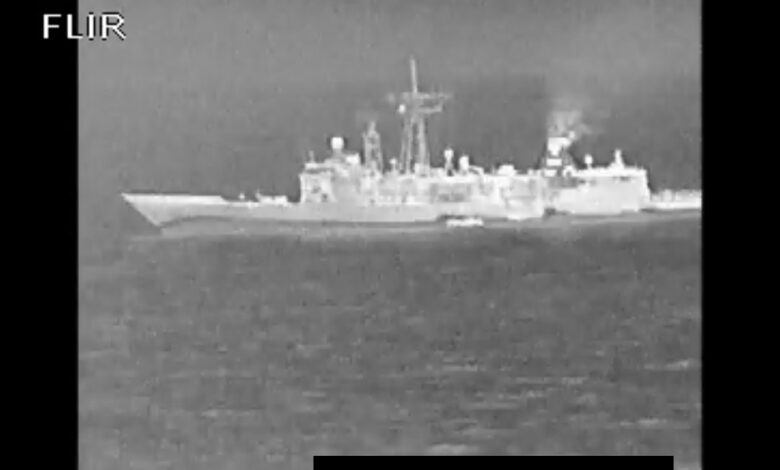
The United States military killed four people in a strike on a boat in the Caribbean Sea on Tuesday, continuing a campaign against alleged drug traffickers that has now killed at least 227 people in 68 strikes. US Southern Command said intelligence showed the vessel was engaged in narcotics trafficking, but it did not identify the people killed or release evidence that the boat carried drugs.
The strike came two days after another US attack in the eastern Pacific killed two people. That operation ended a pause of more than two months and signalled that the administration’s campaign, begun nearly a year ago, is again accelerating.
The government’s case
President Donald Trump’s administration says transnational cartels pose a national-security threat and describes the United States as being in an armed conflict with organisations it calls narcoterrorists. Officials argue that military force is necessary to disrupt routes linked to drug deaths and organised violence.
Southern Command said the latest vessel was travelling along an established trafficking route. A video released publicly showed a moving boat followed by an explosion, but did not provide verifiable information about cargo, identities, an imminent threat or attempts to stop the vessel by less lethal means.
Governments sometimes cannot release intelligence without exposing sources. Even so, a lethal programme requires more accountability than an assertion after each strike. The public and Congress need enough information to assess how targets are selected, what legal authority is used and how civilian or mistaken deaths are investigated.
Why the legal basis is disputed
Human-rights groups and independent United Nations experts have described the strikes as unlawful extrajudicial killings. Their central argument is that suspected drug trafficking is ordinarily a law-enforcement matter. Outside a legally recognised armed conflict, lethal force is generally restricted to situations where it is necessary to protect life from an imminent threat.
The administration’s armed-conflict theory is contested because cartels are criminal organisations, the locations extend across several countries and Congress has not passed a specific authorisation for this campaign. Labeling a group terrorist does not automatically make every suspected member a lawful military target.
If the law of armed conflict applies, forces must still distinguish military targets from civilians, take feasible precautions and avoid disproportionate harm. If law-enforcement rules apply, the standard for intentional lethal force is more restrictive. The government has not publicly explained how each strike satisfies either framework.
Evidence and accountability
A credible system would record the basis for identifying the vessel, surveillance before the strike, available interception options, the command approval and a post-strike assessment. Independent review should be possible when families or coastal communities say those killed were fishermen or other civilians.
Transparency does not require publishing tactical details in real time. Congress can receive classified evidence, inspectors general can audit procedures and courts can examine specific claims where jurisdiction permits. Releasing aggregate casualty numbers and correction policies would also help establish whether the military is learning from errors.
Effectiveness remains uncertain
Destroying a boat may remove a shipment and suspected operators, but trafficking networks can replace vessels and crews. Long-term results depend on financial investigations, port controls, anti-corruption work, treatment for substance dependence and cooperation with affected states.
Military action can also create diplomatic costs if conducted without clear consent or if intelligence proves wrong. Agreements for joint operations require transparent terms and domestic legal authority in each participating country.
The latest strike is important not only because four more people are dead. It shows that a lethal campaign has become routine despite limited public evidence. A government that claims necessity must still demonstrate legality, accuracy and results; national-security language cannot replace those obligations.