UN and Red Cross Seek Binding Rules Before Machines Target Humans

The United Nations and the International Committee of the Red Cross have renewed their call for binding international rules on autonomous weapons, warning that advances in military artificial intelligence are bringing the world dangerously close to machines selecting and attacking human targets without meaningful human control.
UN Secretary-General António Guterres and ICRC President Mirjana Spoljaric issued the joint appeal on August 25, three years after their earlier demand for specific prohibitions and restrictions. They said the gap between technological capability and legal restraint has widened as weapons development accelerates.
What counts as an autonomous weapon
Autonomy exists on a spectrum. Some systems navigate, identify objects or defend a fixed site while a human approves each attack. Others may select and engage targets after activation based on sensor inputs and software-defined criteria.
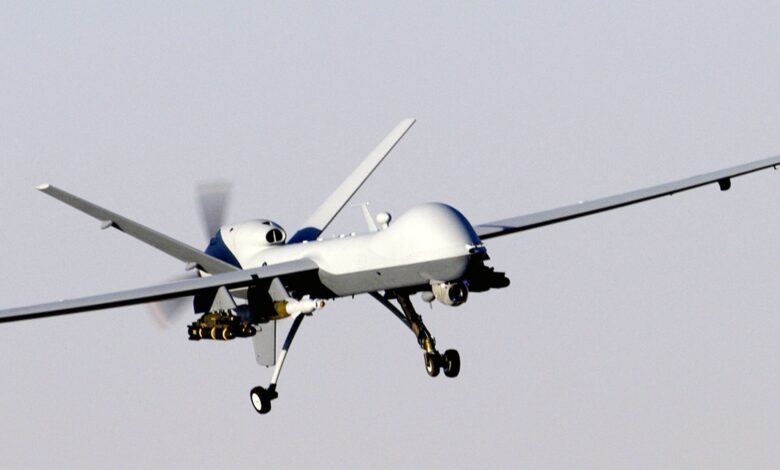
A remotely piloted drone is not automatically an autonomous weapon. The critical questions are who or what selects the target, whether a human understands the system’s operation and environment, and whether an operator can meaningfully supervise or stop the attack.
Artificial intelligence can improve perception and decision support, but machine-learning systems may behave unpredictably when conditions differ from their training data. Dust, weather, damaged sensors, civilian objects or adversarial deception can produce errors that are difficult to explain after a strike.
The requested legal approach
The UN and ICRC are not calling for a ban on every automated military function. Their approach seeks prohibitions on systems whose effects cannot be sufficiently understood, predicted and explained, and on systems designed or used to target people directly. Other autonomous weapons would face restrictions governing targets, duration, geographic scope and human supervision.
The organisations want states to negotiate a legally binding instrument rather than rely entirely on voluntary ethical principles. A November review conference for the Convention on Certain Conventional Weapons is being presented as the clearest near-term route to progress.
Existing international humanitarian law already requires distinction, proportionality and precautions in attack. New rules are sought because assigning those judgments to software creates practical and accountability gaps that general legal principles may not resolve on their own.
Accountability cannot be automated
When a human commander orders a strike, investigators can examine intelligence, intent and precautions. If a system selects a target through a complex model, responsibility may be distributed among commanders, operators, programmers, manufacturers and political leaders.
A weapon cannot be punished, explain why it acted or provide reparations. States therefore remain responsible for ensuring that systems can be used lawfully and that humans are accountable for deployment decisions. Claims that an algorithm made an unexpected choice cannot become a defence against investigation.
Military arguments and real risks
Supporters of greater autonomy argue that machines can react faster, operate when communications are jammed and potentially make fewer emotional or fatigue-related errors. They also say restrictions must not prevent defensive systems from intercepting incoming missiles or drones.
Those potential benefits need evidence and carefully defined exceptions. Faster targeting can also compress decision time, increase the risk of escalation and allow large numbers of systems to act before political leaders understand what is happening. Cheap autonomous weapons could spread to governments and armed groups with weak safety controls.
The UN and ICRC have not confirmed battlefield use of fully autonomous systems that independently target people. It is important not to convert unverified claims into fact. The policy question is whether governments should wait for a mass-casualty failure before agreeing on limits.
A narrowing window for agreement
Rules should define meaningful human control in operational terms, require testing in realistic environments, preserve audit logs and establish procedures for disabling systems that behave unexpectedly. Export controls and transparency about doctrine can reduce proliferation and misunderstanding.
Negotiations will be difficult because major military powers fear losing a strategic advantage. Yet mutual restraint can also protect their own forces and civilians from systems they cannot predict. The purpose of regulation is not to freeze technology; it is to ensure that decisions to kill remain traceable to responsible human judgment.