India Reports More Than Eight Million HPV Vaccine Doses in Cervical-Cancer Prevention Campaign

India has administered more than 80 lakh, or eight million, doses of the human papillomavirus vaccine under its national HPV Vaccination Campaign, according to the Ministry of Health and Family Welfare. The milestone, announced on 11 September 2026, concerns a campaign launched in February to provide a free, voluntary single-dose HPV vaccination to girls aged 14. It is a substantial delivery milestone, but it should be reported precisely: it measures doses administered in a specific campaign, not the elimination of cervical cancer or universal protection for every woman and girl in the country.
The ministry said Gujarat, Uttar Pradesh, Madhya Pradesh and Mizoram had reached 100 per cent coverage in the campaign. Bihar, Andhra Pradesh and Assam had crossed 90 per cent coverage, while Uttar Pradesh had vaccinated more than 22 lakh adolescent girls. Those are campaign figures reported by the ministry. They should not be presented as population-wide vaccination coverage across all age groups, nor as a direct measure of current cervical-cancer incidence in any state.
The word “dose” also deserves care in coverage. It records an administration event, whereas coverage describes the proportion reached in a defined eligible group. The ministry provided both national doses and selected state campaign-coverage figures. These measures can be useful together, but they answer different questions: how many doses have been given, and how far the campaign has progressed among its identified recipients.
A voluntary campaign for a defined group
The campaign’s stated design is important. It is free and voluntary, and it targets 14-year-old girls. That means the programme is built around preventive public-health delivery rather than a requirement attached to schooling, welfare benefits or other services. It also means the reported total reflects the work of state and local health systems in identifying eligible adolescents, arranging sessions, communicating with families and delivering the vaccine through government facilities.
Human papillomavirus, commonly known as HPV, is associated with cervical cancer. The World Health Organization describes cervical-cancer prevention as a combination of vaccination, screening and treatment. Vaccination can reduce the risk posed by HPV infection, while screening and access to treatment remain important parts of a long-term prevention strategy. A responsible account of the eight-million-dose milestone should therefore avoid suggesting that vaccination alone removes every risk or replaces the need for future health services.
The ministry said all vaccination sessions under the campaign are conducted under the supervision of trained medical officers at government health facilities. It also said those facilities are linked to round-the-clock healthcare services for the assessment, monitoring and management of rare adverse events following immunisation. This describes the safeguards built into the campaign’s delivery system; it is not a claim that medical questions are identical for every person. Families and patients who need individual clinical guidance should rely on qualified healthcare professionals and official health information.
The logistics behind a national total
Large vaccination programmes depend on more than a supply of doses. They require trained staff, reliable records, local communication, accessible sites and a way to respond when people have questions or concerns. The ministry said it is working with states and union territories, healthcare professionals, frontline health workers and communities to strengthen awareness, facilitate access and support implementation. The campaign’s final phase is focused on reaching the remaining eligible beneficiaries.
That final-mile work can be particularly consequential. National totals may be high while some communities still face barriers related to travel, local awareness, availability of sessions or the time needed for families to participate. The ministry’s state-level figures provide one way to track progress, but they do not replace the need for transparent local reporting about access and completion. Reaching an eligible population is a different task from simply announcing a national total.
The milestone also sits within a wider public-health discussion about preventing cervical cancer before it develops. The WHO’s approach treats vaccination, screening and treatment as complementary. That distinction is useful for readers because a vaccination campaign is one important layer of prevention, not a stand-alone cure for people who already have a disease or a reason to seek medical assessment. Articles about the programme should not use the milestone to offer individual diagnosis, treatment advice or unsupported claims about outcomes.
The government release says all sessions have medical supervision and links to 24-hour facilities for the management of rare adverse events following immunisation. Reporting that detail helps explain how the programme is intended to operate. It is also appropriate to report it without minimising questions about safety: public confidence depends on accurate information, surveillance and the ability of health systems to respond to concerns promptly and transparently.
The central verified fact is straightforward. India’s Health Ministry says more than eight million HPV vaccine doses have been administered through its free, voluntary campaign for 14-year-old girls since February 2026. The figure demonstrates considerable programme reach within months of launch. Its long-term significance, however, will depend on continued efforts to reach remaining eligible girls, maintain quality delivery, provide clear information and ensure that vaccination is accompanied over time by equitable screening and treatment services.
Sources
- Ministry of Health and Family Welfare / Press Information Bureau: HPV campaign update
- World Health Organization: cervical-cancer prevention
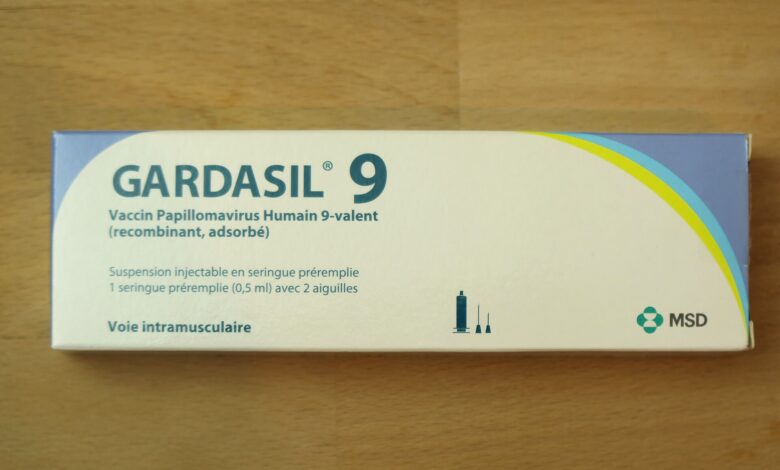
Featured image: HPV Vaccine Gardasil 9 box, CC0 via Wikimedia Commons. Illustrative HPV-vaccine file image; it does not identify the product used in India’s campaign.