Who Is Vivekanand Patil? How an MPSC Aspirant Became the Protest’s Viral Voice

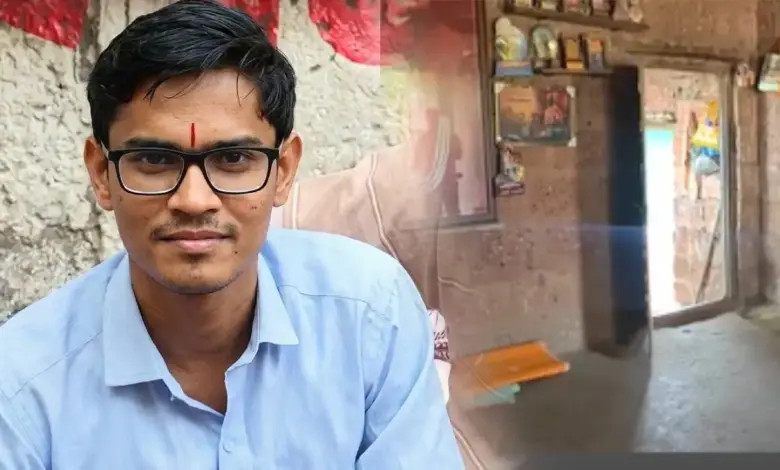
PUNE, October 7, 2026 — Vivekanand Patil arrived in Pune with the ordinary but demanding ambition of thousands of young Maharashtrians: to clear the Maharashtra Public Service Commission examination. The 24-year-old aspirant from Kolhapur district is now attracting statewide attention for speeches delivered during the MPSC candidates’ protest at S. M. Joshi Bridge.
His sudden visibility is a product of both the street and the screen. Short clips of Patil’s speeches—delivered in a distinctly Kolhapuri register, punctuated by humour and political references—have travelled through YouTube, Instagram reposts and regional news channels. Yet his public profile is still very new, and several biographical details circulating online remain thinly sourced. This profile separates what established news reports agree on from what viral edits merely suggest.
From a farming family to competitive-exam preparation
Reports by Pudhari, TV9 Marathi and The Times of India identify Patil as a 24-year-old from Radhanagari taluka in Kolhapur district. Pudhari gives his full name as Vivekanand Maruti Patil and places his family in the Majgaon area. He comes from a farming household, studied political science and moved to Pune for competitive-exam preparation.
That background is central to his appeal. Patil does not speak like a television spokesperson reading prepared lines. His speeches move between the frustrations of candidates, the language of rural Maharashtra, remembered literature and jokes that release tension in a long protest. The Times of India reported that he studies the crowd and uses humour deliberately to sustain its energy. Loksatta reported that he draws on writers including Namdeo Dhasal and Vishwas Patil, alongside the ideas of B. R. Ambedkar and Mahatma Gandhi.
Why the speeches caught fire
The protest began amid candidates’ allegations about MPSC examination paper leaks and demands for greater transparency, investigation and accountability. Those allegations and political demands should not be confused with final judicial findings. Patil’s contribution has been to turn procedural anger into memorable public language.
In one widely circulated argument, he contrasted political divisions among citizens with the shared shock candidates felt when an examination paper was allegedly compromised. His delivery combined satire with the material stakes of competitive exams: years of preparation, family sacrifice and the fear that an unfair process can erase both.
Regional television outlets amplified the clips, while politicians visiting or following the protest added another layer of attention. Maharashtra Times reported that Uddhav Thackeray and Aaditya Thackeray noticed his speech and contacted him. That attention is evidence of his growing reach, not evidence that he represents a political party. No reliable source reviewed for this article established a formal party affiliation.
The house offer he declined
Patil’s fame widened after Congress leader Vishwajeet Kadam offered assistance to build a house for his parents. Patil declined. According to Loksatta and The Times of India, he did not want personal help to distract from the candidates’ collective demands or reduce his public identity to an act of charity.
The refusal strengthened the image now forming around him: a speaker willing to receive attention but wary of letting it replace the cause. It also exposed him to criticism and online speculation. His response repeatedly returned to his parents’ labour and his insistence that clearing the MPSC examination remains his first objective.
Videos that document the rise
Viral rankings change by the hour and the same speech is often uploaded by several channels. Among the most-viewed publicly indexed YouTube copies located during this review were:
- Rajmudra News Live: Vivekanand Patil’s viral MPSC protest speech — about 68,500 views and 1,100 likes when checked on October 7.
- Maharashtra Times: profile and the reported Uddhav Thackeray phone call — about 11,600 views when checked.
- Rajmudra News Live: another protest-stage clip — about 1,600 views when checked.
- Bol Khandu: a longer Kolhapur speech upload — a smaller but useful record of his speaking style.
News reports also describe strong circulation through Instagram reels. However, searches on October 7 did not identify a stable, clearly attributable original Instagram reel for the major speech; reposts can disappear, change captions or detach a clip from its source. Rather than direct readers to a possibly misattributed upload, this article links the verifiable YouTube records above. View and like counts are snapshots, not permanent measures of popularity.
Fame, but no finished story
Patil’s emergence tells a larger story about contemporary protest. A speaker no longer needs a formal post to shape the public conversation; a few forceful minutes, recorded vertically and redistributed by news accounts, can create a statewide figure. But virality can flatten a person into a catchphrase just as quickly.
What is known is modest and specific: Patil is a young MPSC aspirant from a farming family, trained in political science, whose rhetorical skill has made him a prominent voice at the Pune protest. What happens next—whether he clears the examination, remains an activist or enters public life—is not yet known. For now, he says the exam remains the goal, while the movement’s demands belong to the candidates as a whole.