France’s Student Protests: 6,600 Arrests, Serious Injuries and a Government Under Pressure

Paris, October 8, 2026 — A protest movement that began with students demanding better-resourced schools has become a test of how France responds when teenage demonstrators meet riot police. The Interior Ministry says police have made more than 6,600 arrests since the mobilisations accelerated, most involving people under 18. The figure includes 488 arrests during nationwide demonstrations on Tuesday, according to the ministry’s figures cited by the Associated Press. An arrest is not a conviction, and the government disputes claims that its response has been indiscriminately violent. But a series of serious injuries is making that defence harder to separate from the facts on the ground.
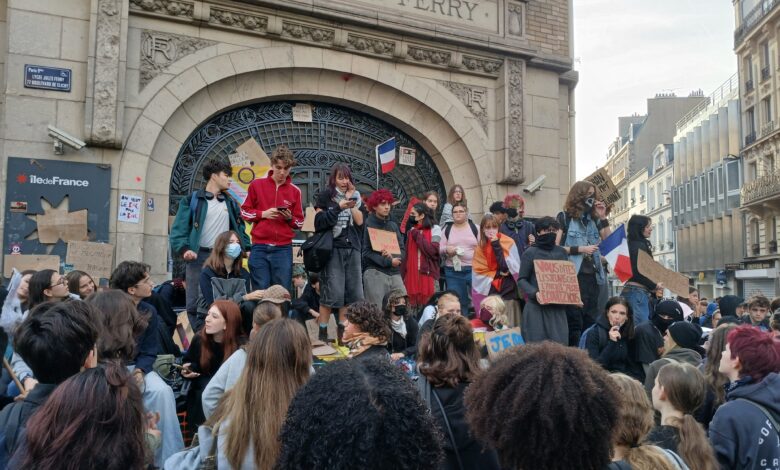
The grievances are concrete. Students have cited overcrowded classrooms, teacher absences that go unreplaced, run-down buildings and inadequate support services. The movement spread from a Paris-region high school in mid-September to demonstrations in cities across the country. On October 6, more than 250,000 people took part in rallies nationwide, according to government figures reported by AP. The protests have drawn students, parents, teachers and union members; they have also included school blockades and clashes in some locations. The scale shows that this is no longer an isolated school dispute.
Police use of force is now central to the political story. AP reported that a 14-year-old in Saint-Ouen-l’Aumône suffered grave facial injuries after being struck by a tear-gas grenade; the officer was later charged with violence by a public official causing mutilation or permanent disability. In Lens, a 15-year-old lost a hand in an incident involving a stun grenade. In Tours, prosecutors are investigating whether a police projectile caused a 16-year-old to partially lose sight. These accounts describe allegations and active proceedings, not final court judgments. The details are disturbing precisely because the victims are minors and the investigations remain unresolved.
The Interior Ministry’s arrest total also needs context. It measures police action, not the number of people found guilty of wrongdoing. Some arrests followed violent incidents; others are being challenged by lawyers and rights advocates. The Associated Press reported that attorneys representing detained students say the scale and tactics of the operation risk turning a generation’s first experience of public participation into an encounter with state force. The prime minister, Sébastien Lecornu, called allegations against police “lies” in parliament, while acknowledging that students’ concerns should be heard. That clash—between an official account of public order and accounts from injured students, families and lawyers—is now shaping the debate as much as school budgets.
The government has made one specific move: after the Lens injury, Interior Minister Laurent Nuñez announced a temporary suspension of stun-grenade use in student protests while authorities establish what happened, Le Monde reported. That is a limited precaution, not a resolution of broader concerns about crowd-control weapons, tear gas, arrests or accountability. Prime Minister Lecornu has said the government is not indifferent to students’ concerns, but as of the latest reporting no new funding package or staffing commitment had been announced. The next policy signal is expected in the government’s budget discussions later this month.
There is a political risk in treating the dispute only as disorder. Blocking schools and attacks on property can disrupt classes and frighten families; students and unions have also reported peaceful marches and specific demands for more substitute teachers and safer, better-maintained facilities. Those realities can coexist. The public-interest test for the state is whether it protects students and bystanders without using force that is unnecessary or disproportionate, and whether it investigates injuries independently. The test for protest organisers is whether they can keep the movement focused on conditions in schools and protect younger participants from foreseeable danger.
What comes next is still open. Student and high-school organisations have called for continued school blockades and further mobilisation, while the government says a response will be considered through the budget process. The arrest figure may rise or fall as legal reviews proceed; the injury cases will move on separate investigative timelines. A useful measure of progress will be published staffing and school-facility commitments, transparent findings into the most serious injuries, and fewer confrontations—not simply a return to empty streets.
Sources: Associated Press, Oct. 8; Associated Press, Oct. 6; Le Monde, Oct. 7; Le Monde, Oct. 7.