Brazil’s Runoff Tightens After Flávio Bolsonaro Leads First Round and Students Take to Rio’s Streets

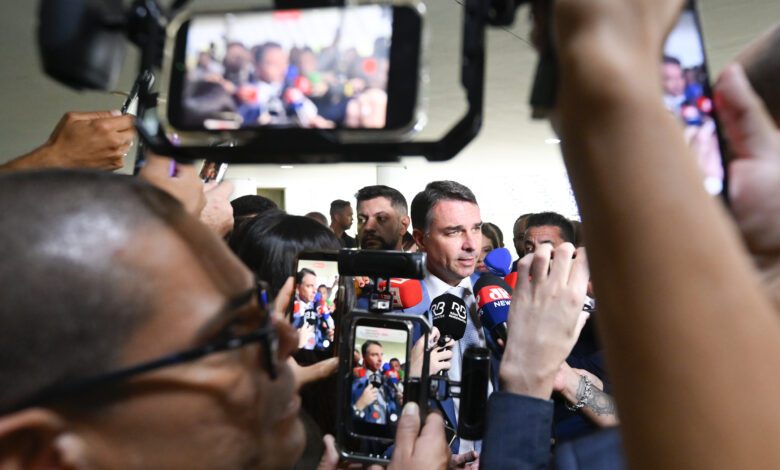
Brazil’s presidential race now has a clear date and an unsettled choice. Senator Flávio Bolsonaro will face incumbent Luiz Inácio Lula da Silva in a runoff on October 25 after neither candidate secured a majority in the October 4 first round. Bolsonaro received 47.03% of valid votes and Lula 45.16%, according to Brazil’s Superior Electoral Court (TSE). The gap is real, but it is not a mandate: millions of voters who backed other candidates, abstained or cast blank and invalid ballots will shape the second round.
The first major street response came in Rio de Janeiro. On October 7, thousands of students marched through downtown against the prospect of a Bolsonaro presidency and in support of Lula, AP reported. Student organisations described the march as a defence of education and democratic rights. The demonstration is one visible expression of the campaign’s stakes, not a measure of national opinion. Brazil’s compulsory-voting system and regional differences make the contest more complicated than a single city’s turnout.
The result put Flávio Bolsonaro in front of the incumbent, a striking opening for a candidate whose name carries both the appeal and the liabilities of his family’s political brand. He is the son of former president Jair Bolsonaro, who remains a defining figure for Brazil’s right. Lula, at 80, is seeking another term after returning to office in 2023. The TSE’s count makes the runoff a direct contest between two established political camps; the campaign now turns on persuasion among voters who did not choose either candidate in round one.
That persuadable electorate is not a single bloc. AP reported that nearly six million voters cast blank or spoiled ballots in the first round, alongside a substantial number who did not vote. Those figures do not tell us how those people will vote—or whether they will return to the polls. Cost-of-living concerns, fuel prices, employment, public security, social programmes and trust in institutions are among the issues candidates will need to address. Analysts cited by AP have pointed to turnout in populous states including São Paulo, Minas Gerais and Rio de Janeiro as important to Lula’s prospects. That is analysis, not a forecast.
Both campaigns face a strategic choice. Lula’s side must persuade voters who want social protection but may be dissatisfied with the incumbent or his party. Bolsonaro’s campaign needs to expand beyond voters who already identify with the right and address concerns about his family’s record and the country’s direction. After the first-round result, AP reported that Lula was considering a campaign shake-up while Flávio sought support from other political groups. Formal alliances, public endorsements and the candidates’ plans for inflation, jobs and public services will be more informative than viral clips or predictions based on one march.
The Rio protest also underlines how the race is being framed by younger voters. AP quoted a student saying the mobilisation was about Brazil, not simply personal loyalty to Lula. That distinction matters: participants are making an argument about the future they want, but other voters may judge the same choices through economic performance, security or dissatisfaction with both candidates. A serious account should report the organisers’ claims while avoiding the leap from a large demonstration to a claim that it represents the electorate as a whole.
The next steps are set by the electoral calendar. Campaigning continues toward October 25, when voters choose between the two finalists. The official count is the baseline; the questions to watch are whether either camp can build a broader coalition, how many first-round non-voters return, and whether the candidates make concrete commitments that speak to the country’s regional and economic differences. Brazil’s runoff is close enough that campaigning matters, but the first-round lead alone cannot tell us who will win.
Sources: Brazilian Superior Electoral Court (TSE), Oct. 4; Associated Press, Oct. 7; Associated Press, Oct. 7; Associated Press, Oct. 5.