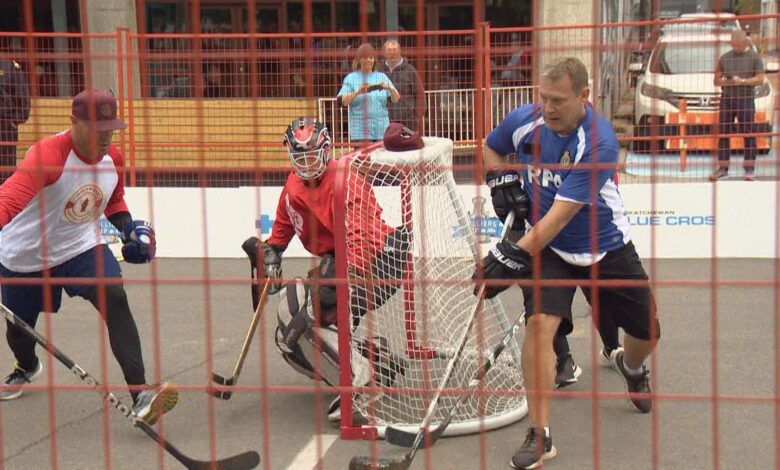
Downtown Regina became a street-hockey venue in September 2024 as teams joined the annual Colliers Cup charity tournament. The three-on-three event combined workplace team building with fundraising for the Regina branch of the Canadian Mental Health Association.
The tournament used a familiar game
Street hockey lowered some barriers associated with organized ice hockey. Players could take part in a short, visible event in the city centre while spectators encountered the charity’s message.
A recreational format also gave colleagues a reason to discuss mental health outside a clinical setting.
Funds supported a local organization
Organizers directed the year’s proceeds to the Canadian Mental Health Association’s Regina branch. Local agencies can use donations for community programming, education, peer support and connections to services according to their current priorities.
Donors should consult the charity’s reporting for the final amount and allocation.
Visibility can reduce stigma
Public events show that mental health is a community concern rather than a private failure. Athletes, employers and residents participating together can make conversations about distress more ordinary.
Awareness is valuable, though it cannot replace timely professional care.
Team building served a wider purpose
Workplace teams gained competition and social contact while contributing to a cause. Well-run charity sport can strengthen relationships across organizations that rarely interact during normal business.
The strongest benefit comes when employers carry supportive practices back to work.
Mental-health needs are diverse
People may require crisis response, counselling, peer programs, housing support or treatment for substance use. A single fundraiser cannot meet every need, but flexible local services can guide residents toward appropriate help.
Language, cost, transportation and cultural safety all influence access.
Fundraising claims need transparent follow-up
Organizers can strengthen trust by publishing gross proceeds, expenses and the net donation after the event. The recipient charity can then describe how money supported measurable activities without exposing client privacy.
Clear reporting makes annual participation more meaningful.
Safety remained part of the event
Temporary street closures, protective equipment, hydration and first-aid planning help keep a public tournament safe. Accessible viewing areas and alternate ways to donate allow participation by people who cannot play.
Weather and traffic plans are especially important in a downtown setting.
Sport should not romanticize illness
Messages such as toughness or pushing through pain can be harmful when applied to depression, anxiety or trauma. Organizers can instead emphasize asking for help, listening without judgment and recognizing emergencies.
Anyone in immediate danger should contact emergency services or an available crisis line.
The event’s impact continued after the final game
The tournament created a short burst of attention. Participants could extend it by learning workplace support procedures, checking on colleagues and sharing verified local resources.
Schools, sports clubs and businesses could also use the event as a starting point for first-aid training and referral partnerships.
Its significance was therefore more than closing a road for hockey. The Colliers Cup connected an accessible Canadian pastime with a defined community partner, giving Regina residents a practical way to raise funds and make mental-health conversations visible. Long-term value would depend on transparent donations and sustained support after the sticks were packed away.