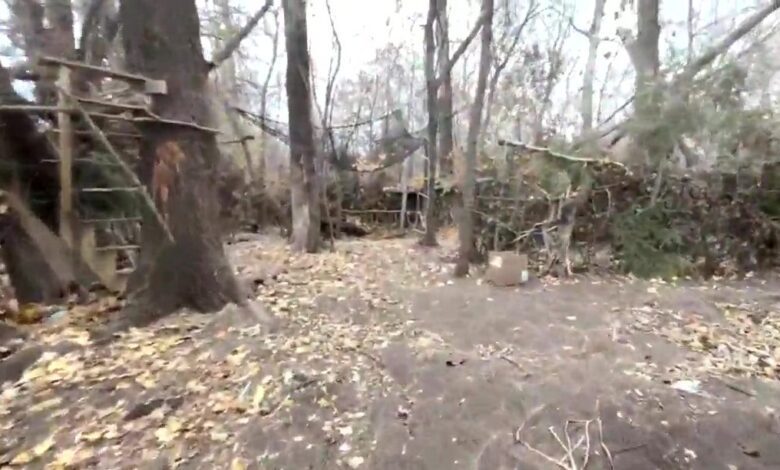
Edmonton police and park rangers dismantled an unusually elaborate encampment in an industrial area near 34th Street and Roper Road in October 2024. Five people were found living among camouflaged multi-level shelters supplied by generators, solar panels, water and household appliances.
A concealed compound
The site was surrounded by a fence made from trees and broken branches, with a wooden gate and structures covered in vegetation. Inside were handmade doors, windows, stone or marble flooring, a fireplace, wood-burning stoves, a small refrigerator and a washing machine.
Police described four generators, including two buried underground, and solar panels. One generator powered a pump that moved water from Fulton Creek to a sink and washing machine.
Safety and environmental concerns
Officers said the structures lacked nails or other adequate support and could collapse in severe weather. Lit fires and loosely installed live electrical wires created additional fire and electrocution risks.
Police reported damage to trees and roots and said the creek had been dammed in several places. Environmental claims should be documented with site assessment, particularly where cleanup decisions and potential charges depend on the extent of harm.
Alleged criminal evidence
The Edmonton Police Service said officers found 15 weapons, including three firearms, a crossbow, knives, swords and a machete, as well as approximately $8,000 in suspected stolen property. A bike “chop shop” with welding equipment was also alleged.
Police said two backpack blowers and a mountain bike were returned to owners, 20 violation tickets were issued and ten warrants were executed. Those police statements did not establish that every resident owned each item or had been convicted of an offence.
People lived there
The technical ingenuity of the compound drew attention, but describing it only as a hidden village can obscure why five people used dangerous shelters in a remote industrial grove. One resident said they had been there since the previous winter.
Police said those present were offered services and supports and declined them. A refusal at one encounter does not explain whether available shelters were accessible, safe, suitable for partners or possessions, or capable of meeting health needs.
Why removal is not the whole solution
Dismantling an unsafe site can address imminent hazards, stolen property and environmental damage. Unless residents have viable housing, displacement may move the same risks to another less visible location.
Effective response combines outreach, low-barrier shelter, supportive housing, mental-health and addiction care, income assistance and lawful enforcement. Data should track housing outcomes after clearance rather than count only structures removed.
Proportionate reporting
Images of appliances and camouflage made this encampment unusual, but they should not be used to characterize all unhoused people as dangerous or criminal. Each allegation requires evidence connected to an individual.
The October discovery revealed resourcefulness, serious structural hazards and reported stolen goods in one place. The public-interest lesson was equally complex: authorities had reason to intervene, while a durable solution required safe alternatives and attention to the housing conditions that led people to build a hidden home beside an industrial creek.