Putin Tries to Recruit More Soldiers, Encourage Bigger Families
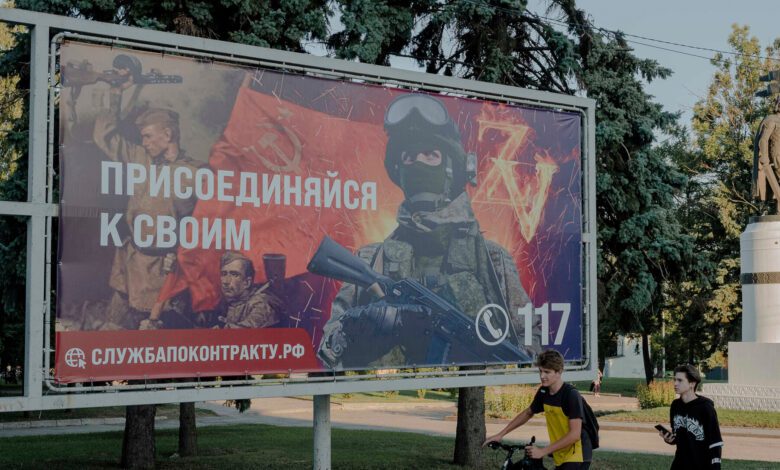
President Vladimir Putin’s government pursued two problems at once in 2024: finding enough personnel for Russia’s war against Ukraine and reversing a long-term decline in births. Higher military bonuses could recruit adults immediately, while family policy addressed a demographic shortage that would take decades to alter.
The authorized size of the armed forces rose again
In September, Putin ordered the number of active servicemen to increase by 180,000 to 1.5 million from December 1. Total armed-forces staffing, including non-combat personnel, was set at nearly 2.39 million.
A decree authorizing positions does not prove that every post has been filled. Recruitment, training, retention and the availability of officers determine whether a nominal increase becomes an effective force.
Cash incentives were central to recruitment
Putin doubled the federal signing payment for eligible contract soldiers to 400,000 rubles in July and urged regions to add at least the same amount. Monthly military pay and locally funded bonuses could make the first-year package many times higher than ordinary wages in poorer regions.
Moscow offered particularly large city payments. The variation meant two recruits doing comparable work could receive different bonuses depending on where they enrolled.
The Kremlin sought to avoid another broad mobilization
Russia called up more than 300,000 reservists in 2022, prompting protests and an exodus of some draft-age men. After that disruption, authorities relied heavily on contract recruitment, regional quotas, prison recruitment and other targeted channels.
Officials regularly announced recruitment totals, but independent verification was difficult. Wartime casualty figures from Russia and Ukraine also differed widely, making the precise gap between losses and new personnel uncertain.
Recruitment carried economic costs
Large military payments attracted workers from civilian employers already facing labour shortages. Defence production supported headline economic activity, yet it also competed for workers, materials and public money and contributed to inflationary pressure.
A bonus can fill a near-term vacancy without resolving shortages of trained leaders or specialists. Rapid expansion may reduce average experience if training capacity does not grow at the same pace.
Demography was a separate structural crisis
Russia’s fertility rate remained well below the level needed for long-term population replacement. An ageing population, deaths, emigration and the effects of war intensified concern about the future workforce.
The Kremlin declared 2024 the Year of the Family and promoted maternity capital, subsidized mortgages and payments for children. These programmes predated the full-scale invasion and were part of a continuing pronatalist agenda.
Pressure accompanied financial support
Officials increasingly promoted large families as a patriotic duty. Later in 2024, Russia enacted restrictions on what the state called propaganda encouraging people not to have children, with financial penalties for prohibited public content.
Rights advocates warned that coercive rhetoric and pressure around reproductive decisions could harm women without addressing housing costs, child care, income insecurity or health care—the conditions that shape family choices.
Babies cannot solve a current manpower shortage
Even a rapid increase in births would not add adult soldiers or workers for roughly two decades. Military recruitment and family policy were therefore linked in political messaging but operated on radically different timelines.
War can also undermine demographic goals by causing deaths, disability, separation and emigration among people of working and childbearing age.
The policies reveal the scale of Russia’s challenge
The 2024 measures showed that the Kremlin could devote substantial money and authority to military expansion while elevating population growth as a national priority. They did not demonstrate that either target had been achieved.
The reliable conclusion is limited: Russia raised its authorized force size and increased incentives to attract contract soldiers, while intensifying programmes and rhetoric intended to encourage larger families. Recruitment bought near-term capacity at economic and human cost; pronatalism promised only uncertain long-term effects. Treating both as evidence of effortless national strength would ignore the shortages that made them necessary.