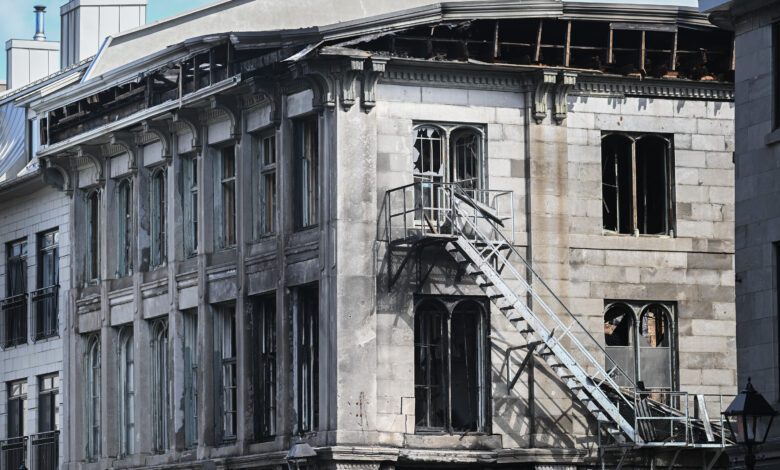
Montreal police charged two young men with arson and second-degree murder after an October 4, 2024 fire in Old Montreal killed a visiting mother and her seven-year-old daughter from France. The case concerned a different building from the March 2023 blaze that killed seven people, although both properties had the same owner.
The victims and charges
Léonor Geraudie, 43, and her daughter Vérane Reynaud Geraudie died in the Notre-Dame Street East building. Another man was injured.
Justin Fortier-Trahan, 20, and Juventino Hernandez Pelaez, 18, each faced two counts of second-degree murder. They were also charged in relation to the injured man and with recklessly endangering life by damaging occupied property by fire or explosion.
What police alleged
Investigators alleged that Fortier-Trahan threw an incendiary device into the building and that Hernandez Pelaez drove the getaway vehicle. Surveillance evidence and witness accounts formed part of the investigation, but the allegations had to be tested through the criminal process.
Second-degree murder is a charge, not a verdict. Both accused were entitled to the presumption of innocence, and reporting their alleged roles should not imply that a court had already accepted the prosecution’s account.
A second fatal fire drew scrutiny
The October blaze came less than two years after seven people died in a March 2023 fire at another Old Montreal property containing short-term rentals. City records identified lawyer and property owner Emile Benamor as the owner of both buildings.
The shared ownership and the neighbourhood’s fire history were legitimate matters of public concern, but they did not prove that the two fires had the same cause or perpetrators. Each investigation required its own evidence.
Building-safety questions
After the 2024 fire, officials and residents examined alarms, exits, occupancy, renovations and enforcement at older buildings. Heritage construction can complicate upgrades, but age does not remove an owner’s duty to comply with fire, building and rental rules.
A public inquiry ordered by Quebec’s chief coroner was intended to examine the deaths and make recommendations. Its role was distinct from a criminal trial: the inquiry could study systems and prevention without determining criminal guilt.
The case remained before the courts
Reporting in October 2025 said the two accused were still awaiting trial on the murder and arson allegations. No final verdict should be inferred from the passage of time, pretrial appearances or the seriousness of the charges.
Likewise, later developments concerning the owner of the separate 2023 fire should not be folded into this prosecution as if they established responsibility for the 2024 deaths.
Lessons beyond one prosecution
Criminal charges address alleged acts by individuals. Preventing another fatal fire also requires clear occupancy records, enforceable inspection orders, functioning alarms, unobstructed exits and timely coordination among fire, building and rental authorities.
Short-term visitors may be unfamiliar with a building and asleep when danger begins. Hosts and booking platforms should provide accurate layouts and legal occupancy information, while guests should locate exits and report missing alarms without assuming an online listing guarantees compliance.
A careful public record
The mother and child who died should remain central, not the notoriety surrounding the properties. Graphic speculation, rumours of motive and unproved claims about organized crime do not improve accountability.
The verified account is already serious: an occupied building was deliberately set ablaze according to police, two people died, another was injured and two men were charged. Courts must determine individual guilt, while the coroner and regulators examine what safety changes could prevent a similar loss.