One hundred memorial posters appeared on light poles along Edmonton’s 100th Avenue in early November 2024, putting names, ages and service details of local fallen soldiers into the daily path of downtown residents. The project, called “Our Heroes Your Heritage,” was intended to make Remembrance Day personal and connect the city to its military history.
Stories placed in public view
The posters featured members associated with the Edmonton regiment who died during the First and Second World Wars. Rather than presenting loss as a single national total, each display gave passersby information about one individual.
Joe MacDonald, a regimental historian with the Loyal Edmonton Regiment Military Museum, emphasized that some of the people commemorated were younger than viewers might expect. He identified Private John B. Dunlop as the youngest in the project at 16 and said two of Dunlop’s brothers also went missing during the First World War.
A family connection behind the work
MacDonald said his own great-grandfather fought in the First World War and died at Vimy Ridge. That connection helped explain his commitment to keeping service records visible more than a century later.
Family memories can lead researchers to valuable records, but a public memorial should confirm names, units, dates and ages through military files, casualty registers and archival material. Transparent sourcing helps relatives correct errors and allows students to continue the research.
Where and how long the posters appeared
The 100th Avenue display was installed on November 2 and scheduled to remain until November 12. Additional posters were planned for locations including Edmonton City Hall and the Loyal Edmonton Regiment Museum.
A temporary project can reach people who do not visit a museum. Weather-resistant design, accessible type and placement that does not obstruct streets or mobility all affect whether the public can engage with it safely.
Remembrance as education
A name and photograph can begin a lesson, but commemoration should not flatten history into uncomplicated heroism. Students can study why wars began, the experiences of civilians, and how service differed across rank, gender, ethnicity and community.
Indigenous, Black and Asian Canadian service members often returned to discrimination despite their contributions. Including underrepresented records and acknowledging historical exclusion makes collective memory more accurate.
Respectful use of personal stories
The people on the posters were more than their deaths. Where records permit, interpretation can include family, occupation, community and life before enlistment. Images and letters should be used with proper archival credit and sensitivity to descendants.
MacDonald hoped a relative might recognize a great-grandparent or great-uncle. That outcome would connect formal military history with living family knowledge, while researchers still need to separate recollection from verified fact.
What the project achieved
“Our Heroes Your Heritage” used an ordinary city street as a temporary archive. It did not replace a cenotaph, museum or classroom; it created a path toward them.
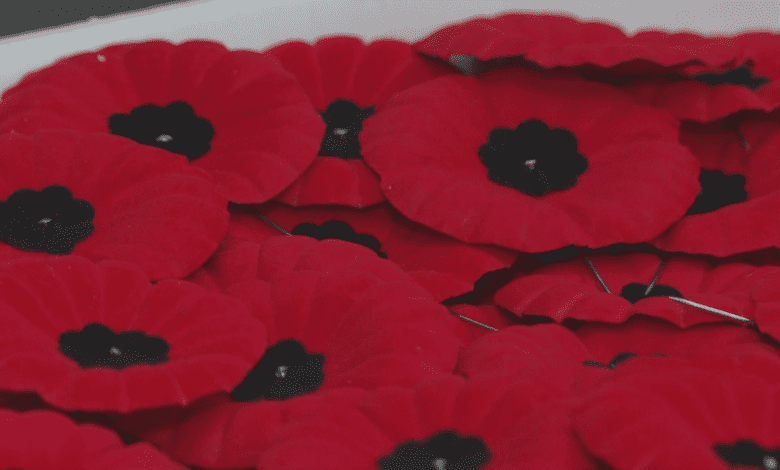
The project’s measure of success was not only the number of posters. It was whether people stopped, read carefully and understood that each casualty represented a particular young life and a community changed by war. Preserving those records with accuracy gives the annual poppy and ceremony a meaning that can survive beyond November.