After Being Shot, Slovakia’s Leader Targets His Enemies
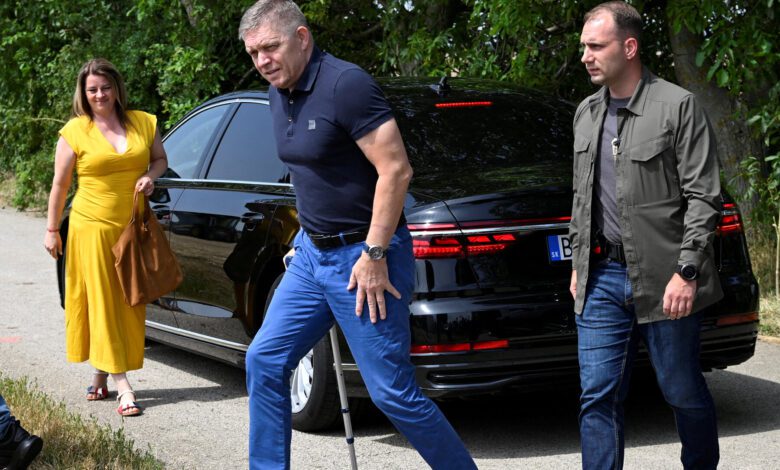
Slovak Prime Minister Robert Fico survived an assassination attempt in May 2024 and returned to politics blaming opposition forces, independent media and liberal institutions for creating hostility. Critics warned that his government was using a genuine act of violence to intensify pressure on democratic opponents.
The shooting nearly killed him
A gunman fired five rounds as Fico greeted people after a government meeting in Handlová. The prime minister underwent lengthy emergency surgery and a second operation for multiple wounds.
The suspect was detained and charged, with motive and possible assistance investigated.
Political violence deserved universal condemnation
Opposition parties and civil-society groups denounced the attack and paused campaigning. No policy disagreement can justify an attempt to kill an elected leader.
Protecting officials must not require suppressing lawful criticism of them.
Fico rejected a lone-attacker explanation
In his first recorded statement, he said he forgave the gunman but portrayed him as a messenger produced by an antagonistic political environment. Authorities had initially discussed a lone actor while continuing to investigate other involvement.
Broader responsibility required evidence, not ideological association.
Coalition figures targeted critics rhetorically
Government allies accused media, nongovernmental groups and opposition leaders of fueling hatred. Such claims can turn grief and fear into justification for retaliation against institutions that did not commit the crime.
Specific unlawful speech should be addressed through neutral law.
The government was already changing institutions
Fico’s coalition pursued changes to criminal law, anti-corruption structures and public broadcasting. Opponents said these moves weakened checks on power and brought Slovakia closer to Hungary’s illiberal model.
Supporters said electoral victory gave the coalition a mandate for reform.
Security laws expanded after the attack
Measures increased protection for senior politicians and regulated demonstrations near homes and institutions. Some precautions were understandable, but restrictions needed narrow definitions and judicial review.
Emergency reasoning can otherwise become permanent.
Media freedom was especially vulnerable
Slovakia retained the trauma of investigative journalist Ján Kuciak’s 2018 murder. Journalists examining corruption or government policy require protection from threats and official delegitimization.
Harsh reporting is not equivalent to incitement to violence.
Foreign policy deepened polarization
Fico opposed military aid to Ukraine and criticized Western sanctions on Russia. He argued those positions helped make him a target, while opponents said he was exploiting the shooting to discredit pro-Western rivals.
Neither explanation was established merely by repetition.
Recovery could have supported de-escalation
A leader who survived political violence had unusual authority to demand restraint from every faction. Using that authority selectively risked reinforcing the same cycle of suspicion blamed for the attack.
The proper democratic response was an impartial criminal investigation, proportionate security and continued space for peaceful opposition. Sympathy for Fico’s suffering did not require accepting unproven claims against his critics or abandoning scrutiny of his government.
Parliament, courts and European institutions could examine new restrictions against constitutional and human-rights standards. The government, opposition and media also shared a duty to correct false claims and avoid language that depicts rivals as traitors. De-escalation is strongest when demanded of one’s own side as well as opponents.