Mexico Is Split on Judicial Overhaul as Plan Inches Toward Becoming Law
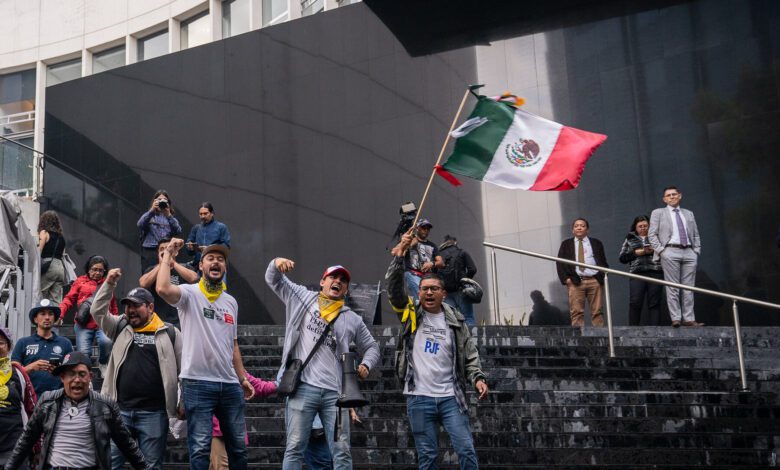
Mexico’s judicial overhaul divided the country as it approached enactment in September 2024. Supporters saw direct elections as a way to break corruption and privilege; opponents feared the governing party and organized interests would gain new leverage over courts.
The old system lacked public trust
Cases often moved slowly, impunity remained high and access varied sharply by wealth and geography. Many Mexicans did not experience courts as independent or effective.
Defending the previous appointment model without addressing those failures was not persuasive.
Election promised a visible form of accountability
Voters would choose federal judges, magistrates and Supreme Court members from candidates screened by branches of government. Advocates argued public selection could disrupt closed professional networks.
Accountability at the ballot box differs from accountability through reasoned judgments and appeals.
Candidate screening could shape the outcome
Executive, legislative and judicial institutions would help generate lists. If governing majorities dominated nominations, an election might offer choice within a politically filtered pool.
Transparent qualifications and independent review were therefore essential.
Campaigns require money and public recognition
Judicial candidates are usually less familiar than party politicians. Voters facing long ballots may rely on endorsements, advertising or organized voting guides.
Strict finance disclosure is needed to prevent parties, businesses or criminal groups from buying influence.
Current employees feared mass replacement
Judges and court workers protested the speed and scope of transition. Losing experienced personnel at once could worsen backlogs and disrupt ongoing cases.
A fair implementation plan needed merit-based opportunities and protection of lawful employment rights.
Business groups worried about certainty
Investors depend on courts to enforce contracts and review government decisions. The United States and Canada also watched implications for the continental trade agreement.
Economic concern should not give foreign governments control over Mexico’s constitution.
Ordinary litigants faced the greatest stakes
Families need timely decisions in criminal, labour, land and domestic cases. Reform debate often focused on Supreme Court politics while local access, public defenders and prosecutorial performance remained equally important.
Electing judges does not repair every part of the justice system.
Polarized debate encouraged false certainty
Neither side could know in advance that elections would cleanse corruption or destroy independence. Comparative experience with elected judges is mixed and depends heavily on institutional safeguards.
Claims should be tested against data after implementation.
Success needed measurable criteria
Mexico could monitor case duration, reversal rates, corruption complaints, diversity, campaign spending and threats against judges. Public explanations should show whether outcomes improve across states and income groups.
The division reflected two legitimate demands: courts must not be an insulated elite, and they must be able to resist political power. A durable reform would have to meet both. Elections were the mechanism chosen, but transparent nominations, secure tenure, professional capacity and meaningful review would determine whether citizens actually received better justice.
Transition reporting should track vacancies and postponed hearings so institutional change does not make ordinary litigants wait longer. Civil society and universities can provide neutral voter information while refusing party endorsements. Public participation becomes meaningful only when candidates’ qualifications and conflicts are understandable.