Canadian business and tourism groups urged Ottawa to prevent a possible Air Canada pilots’ strike in September 2024, warning that a shutdown could disrupt passengers, cargo and trade. Labour representatives and the NDP argued that government should respect collective bargaining rather than impose a settlement.
A legal deadline was approaching
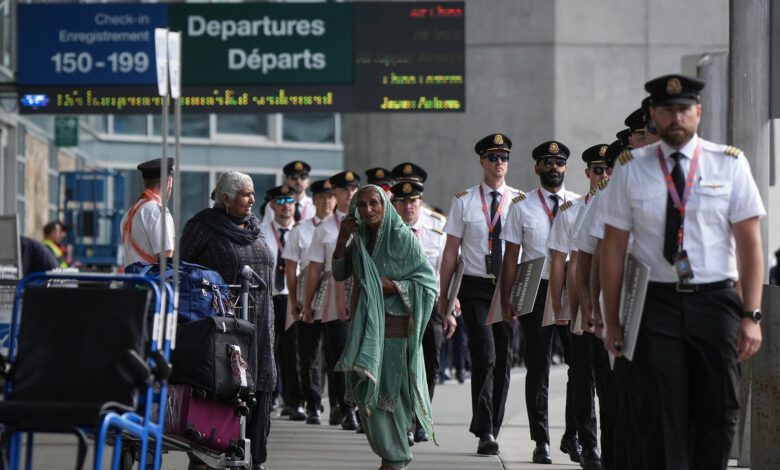
Air Canada and the Air Line Pilots Association, representing more than 5,200 pilots, could issue 72-hour strike or lockout notice after September 15. Operations could then stop as early as September 18.
Bargaining continued, so disruption was a risk rather than a certainty.
Several national groups sought action
The Canadian Chamber of Commerce, Business Council of Canada, Canadian Federation of Independent Business and tourism organizations warned of broad economic consequences. They cited critical travel and fragile supply chains.
Their statements represented employer and industry interests, not a neutral legal finding.
Air transport carries time-sensitive goods
Passenger aircraft move pharmaceuticals, perishables and components in their holds. Remote communities and businesses with international customers can have few practical alternatives.
Losses can continue after service resumes because aircraft and crews must be repositioned.
Pilots sought improved terms
Pay, scheduling and the gap with compensation at major U.S. airlines were central issues. Workers had voted overwhelmingly to authorize a strike if negotiations failed.
A mandate strengthens bargaining power but does not require the union to stop work.
The labour minister met both sides
Steve MacKinnon urged the company and union to reach an agreement at the table. The federal government had legal tools under the Canada Labour Code, but early intervention could alter bargaining incentives.
Government pressure is not the same as binding arbitration or back-to-work legislation.
The NDP opposed imposed return to work
Jagmeet Singh said his party would not support legislation forcing pilots back. The position emphasized workers’ constitutional freedom of association and the value of negotiated contracts.
Parliamentary arithmetic mattered if a bill were introduced.
Intervention carries a long-term cost
If either party expects government to rescue it from a shutdown, compromise may become harder. Repeatedly removing the right to strike can weaken collective bargaining.
Conversely, an extended national stoppage can impose harms on people outside the dispute.
Contingency planning could limit damage
Airports, shippers and government could prioritize medical and remote-community needs without dictating wages. The airline could communicate cancellations early and preserve refunds and rebooking capacity.
Transparent operational data would help determine when public intervention became proportionate.
A negotiated agreement remained best
Business groups were right that millions of people could be affected, while unions were right that inconvenience alone does not erase bargaining rights. The government needed to distinguish facilitation from compulsion and define any emergency threshold clearly.
The strongest outcome would be a ratifiable contract reached by the parties. Until then, Ottawa’s role was to support intensive bargaining, protect essential public interests and avoid making one side believe political pressure could replace compromise.
Independent mediation and a voluntary extension were available tools. Any stronger measure should be time-limited, publicly justified and preserve a fair process for resolving the underlying contract rather than merely postponing it.