U.K.’s Revered NHS Is in Deep Trouble, Darzi Report Finds
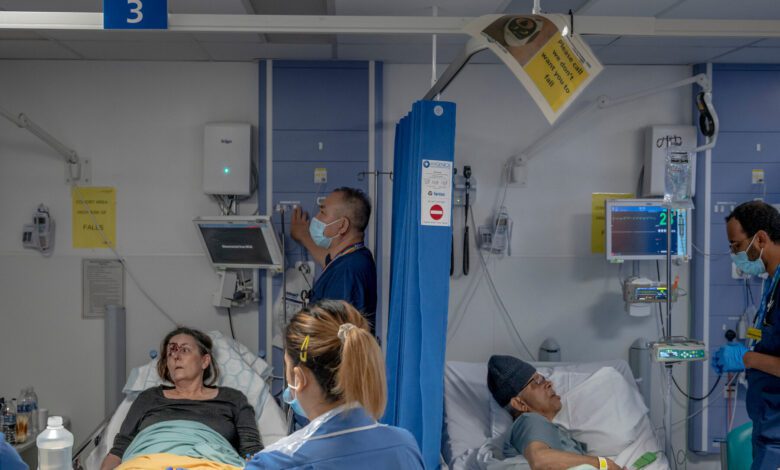
Lord Ara Darzi’s September 2024 review concluded that England’s National Health Service was in critical condition, with long waits, poor productivity, deteriorating infrastructure and weakened public health. It described a diagnosis for reform rather than a costed treatment plan.
Access had sharply deteriorated
Patients waited longer for general practice, community care, mental-health treatment, ambulances and planned hospital procedures. Emergency departments struggled to move people into beds.
Delays can worsen illness, make treatment more complex and reduce trust.
Cancer performance was troubling
The report said cancer mortality compared poorly with peer countries and progress on early-stage diagnosis had stalled between 2013 and 2021. Diagnostic delays narrow treatment options.
Screening participation, scanner capacity and rapid specialist pathways all matter.
Capital investment had lagged
Hospitals worked with too few scanners and aging buildings, while mental-health facilities sometimes remained seriously substandard. Maintenance backlogs made staff less productive and created safety risk.
More employees cannot compensate fully for inadequate equipment and space.
Staffing grew without matching output
Hospital headcount had risen, yet activity and productivity did not recover as expected. Darzi connected this gap to flow problems, poor capital, management pressures and patients waiting in the wrong settings.
The finding should not be simplified into blaming frontline workers.
Care had shifted toward hospitals
Resources did not move sufficiently into primary, community and preventive services even as demand grew. When people cannot obtain early help, they arrive in emergency departments sicker.
Rebalancing funds requires community capacity before hospital beds are removed.
The pandemic intensified older weaknesses
COVID-19 created backlogs and workforce trauma, but the review traced decline to years before 2020. Austerity, capital underinvestment and organizational churn reduced resilience.
The pandemic was an accelerant rather than a complete explanation.
Population health had worsened
More people were living with long-term illness and economic inactivity related to health. Poor housing, inequality and delayed prevention increased pressure that clinical services alone could not solve.
Health policy therefore extends beyond the NHS budget.
Darzi proposed broad directions
He emphasized care closer to home, better technology, engaged staff, empowered patients and more productive hospitals. The incoming Labour government said the findings would inform a ten-year plan.
Each direction still needed funding, sequencing and measurable goals.
“Broken” did not mean irreparable
The report praised staff and the NHS model of care based on need rather than ability to pay. Its warning was that public commitment could not overcome operational failure indefinitely.
Recovery required honest baselines, stable capital investment and fewer reorganizations for their own sake. Government would be judged not by dramatic language but by whether waiting times, early diagnosis, staff conditions and patient outcomes improved without widening inequality.
A credible ten-year plan would publish annual milestones for primary-care access, elective waits, ambulance handovers, mental-health facilities and diagnostic capacity. It would protect time for implementation rather than announcing targets without staff or capital.
Patients and carers should help design changes because administrative efficiency can miss barriers visible only to people navigating several services. Local experimentation is useful when results are comparable and unsuccessful models are stopped.