Pakistan Begins Vaccination Program Against Polio
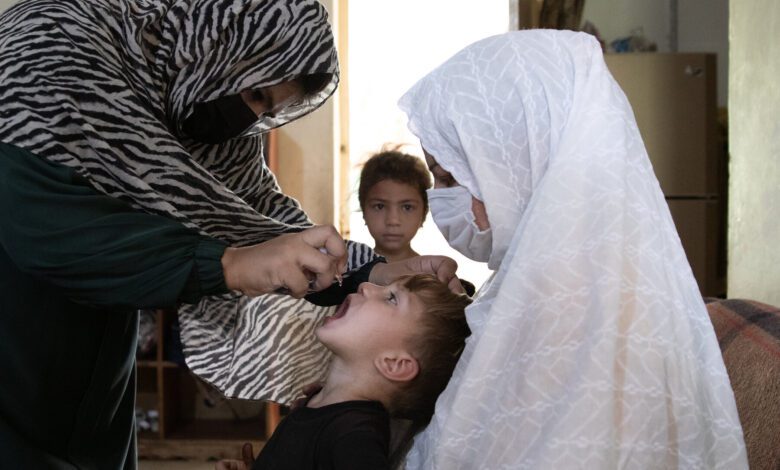
Pakistan launched a polio vaccination drive from September 9 to 15, 2024, aiming to reach more than 30 million children under five across 115 districts. The campaign responded to renewed detections of wild poliovirus in a country where transmission had never been completely interrupted.
Oral vaccine teams went door to door
Health workers administered drops in homes and at transit points, recording which children had been reached. Repeated campaigns are necessary because several doses may be required for strong intestinal immunity, especially where sanitation is poor.
A campaign dose supplements routine childhood immunization rather than replacing it.
Cases had risen during 2024
Pakistan had confirmed 17 cases by the campaign’s start, with additional cases identified later in the month. Sewage surveillance also found virus circulation in multiple districts.
Because most infections cause no paralysis, one detected case can indicate much wider silent transmission.
Polio can cause irreversible paralysis
The virus spreads mainly through faecal contamination and can invade the nervous system in a small fraction of infections. Children are especially vulnerable, and there is no cure after paralysis occurs.
Vaccination prevents disease and reduces community transmission.
Pakistan and Afghanistan remained endemic
They were the only countries where wild poliovirus had never been eradicated. Cross-border movement meant outbreaks could not be controlled by one national campaign alone.
Coordinated vaccination, surveillance and access on both sides were essential.
Security threatened health workers
Polio teams and their police escorts had faced attacks driven by militant violence and misinformation. Some families also refused drops because of distrust or false claims about ingredients and fertility.
Protecting workers and using trusted local messengers were part of disease control.
Missed children sustain transmission
A campaign may report high overall coverage while repeatedly missing the same mobile, remote or resistant communities. Independent monitoring should identify children who were absent, inaccessible or refused vaccination.
Follow-up rounds matter more than a headline percentage.
Clean water supports but cannot substitute for vaccine
Sanitation reduces faecal-oral spread and improves many health outcomes. Yet infrastructure takes time, and poliovirus can circulate before systems are upgraded.
Eradication requires both high immunity and rapid environmental surveillance.
Global eradication protects every country
As long as wild virus circulates, it can be imported into places with immunity gaps. Maintaining routine vaccination prevents imported cases from becoming sustained outbreaks.
Success in Pakistan therefore carries benefits far beyond its borders.
The campaign required trust after the teams left
Parents needed accurate information, respectful consent and reliable access to routine clinics. Health authorities needed transparent case reporting and prompt investigation of adverse events or rumours.
Community leaders, religious figures and local clinicians could answer concerns in familiar languages, while authorities supported vaccinators with secure routes and adequate pay. Maintaining cold-chain records ensured that every administered dose remained effective.
Mobile populations required vaccination at transport hubs and across district boundaries.
The September drive was a necessary emergency push, not proof that the job was complete. Eradication would be achieved only when surveillance found no wild poliovirus over the required period and every community could sustain immunity without repeated gaps.