
Red Cross Workers Killed in Ukraine in Shelling Attack
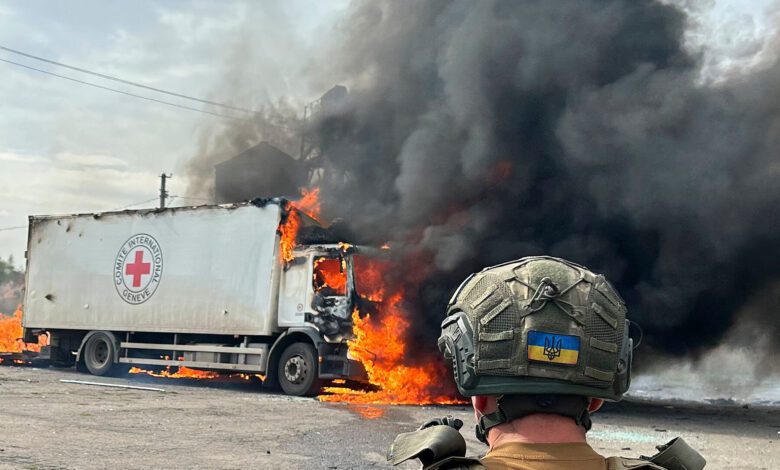
Shelling struck a planned aid-distribution site in Viroliubivka in Ukraine’s Donetsk region on September 12, 2024, killing three International Committee of the Red Cross employees and injuring two. The team had been preparing to distribute fuel supplies to vulnerable households.
The victims were humanitarian workers
The ICRC said its colleagues were not taking part in hostilities. Their vehicles and equipment were at a location intended to support civilians facing difficult conditions near the front.
The organization mourned the deaths and suspended activity needed to protect remaining staff.
Ukraine blamed Russian shelling
Ukrainian officials, including President Volodymyr Zelenskyy, attributed the attack to Russian forces. The ICRC’s initial statement condemned the strike but did not publicly assign responsibility.
Attribution should reflect the evidence available from the site and military data.
The village was in a dangerous area
Viroliubivka lies in the Donetsk region, where artillery and other weapons repeatedly endangered communities and responders. Front lines and ranges can change, making planned humanitarian movements risky even when coordinated.
Danger does not remove the parties’ legal obligations.
Humanitarian personnel are protected
International humanitarian law requires respect and protection for relief workers engaged in exclusively humanitarian duties. Parties must distinguish military targets from civilians and take feasible precautions before attacking.
Intentional attacks on protected personnel can constitute war crimes.
Deconfliction can reduce but not eliminate risk
Aid organizations may notify armed forces of sites, routes and timing. Effective systems need current coordinates, confirmation that operational units received them and a way to halt fire when circumstances change.
A shared location is useful only when combatants act on the information.
Fuel assistance was life-sustaining
Solid fuel helps households heat homes as temperatures fall and energy infrastructure is damaged. Interrupting distribution can endanger people long after the immediate blast.
Replacement staff may be reluctant to return unless safety is credibly improved.
An investigation should preserve evidence
Investigators need munition fragments, crater analysis, witness testimony, radar or acoustic data and records of military positions. Public claims from belligerents should not substitute for technical examination.
Findings should address command responsibility as well as the person who fired.
Neutrality does not mean silence about harm
The ICRC uses confidential dialogue to maintain access to prisoners and front-line communities. That operational model can frustrate people seeking public attribution, but neutrality is intended to allow contact with all parties.
It never makes an attack on staff acceptable.
The deaths affected the wider aid system
Humanitarian organizations assess risk collectively; one fatal incident can restrict deliveries across a region. Civilians then lose food, medicine, repair materials and evacuation support.
The confirmed facts required a sober conclusion: three ICRC employees were killed and two injured at an aid site, Ukrainian authorities blamed Russia, and an independent investigation was necessary. Protecting humanitarian access required accountability and operational changes, not only expressions of regret.
Other states can assist by sharing imagery and technical evidence with a competent investigative mechanism. Armed forces should also review targeting procedures immediately, without waiting years for a final legal judgment.
Prevention remains urgent.



