
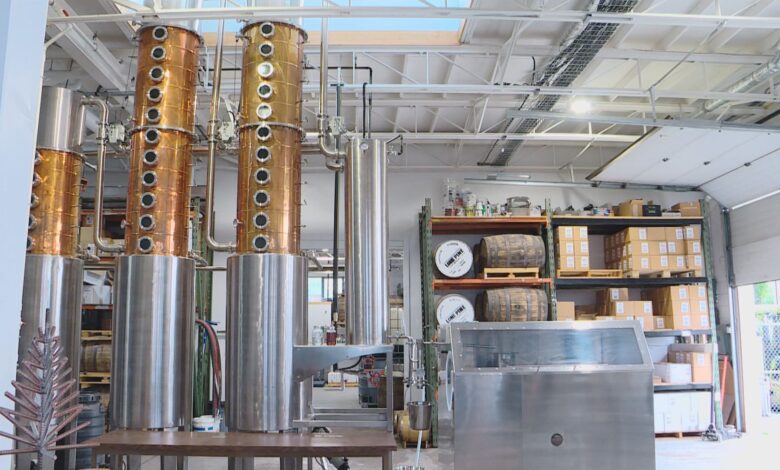
Alberta’s craft distillers called for a new provincial liquor-markup framework in September 2024, arguing that rules developed for a much smaller industry discouraged local producers from growing. The businesses did not seek freedom from regulation; they wanted thresholds that increased gradually and treated Alberta production more consistently.
A young sector had expanded rapidly
Alberta removed a high-volume minimum-production requirement in 2014, opening the market to smaller distilleries. The province had about seven craft distilleries by 2016 and roughly 70 by 2024.
That growth made regulations last comprehensively revised in 2003 increasingly difficult to fit to the industry.
Distilling requires long-term investment
Producers must buy equipment, comply with food and alcohol rules, source ingredients and build a brand in a crowded market. A spirit aged in barrels may not generate revenue for three to five years, even though the distiller has already spent money producing and storing it.
Small firms therefore need predictable rules before committing capital.
Competition on retail shelves was intense
Lone Pine Distilling founder Bryan Anderson said Alberta products competed with about 35,000 listings from local, national and international suppliers. Placement alone does not guarantee customer recognition or sales.
Craft producers often lack the marketing budgets and distribution scale of multinational brands.
The liquor markup was the main concern
Alberta Gaming, Liquor and Cannabis applies a markup as liquor moves through the provincial wholesale system. The Alberta Craft Distillers Association said abrupt changes at production thresholds could make success unexpectedly more expensive.
Its members described a patchwork of one-off rules and uneven taxation rather than a smooth path from startup to medium-sized producer.
The association proposed a progressive system
One request was a graduated markup that would rise in steps as a producer grew. Advocates said this could preserve support for very small businesses without creating a financial cliff when they increased output.
A sound design would also prevent companies from artificially dividing operations simply to remain below a threshold.
A production cap was also disputed
The association wanted the annual limit for small manufacturers increased from 140,000 litres to 400,000 litres of absolute alcohol. Absolute alcohol measures pure ethanol, not the total volume of bottled beverages.
The distinction matters when comparing products with different strengths.
The province had consulted stakeholders
Alberta surveyed industry participants while reviewing the framework. A value-based markup was considered but drew little support, leaving the government to examine other approaches.
Officials were expected to present proposed changes in the following spring, so the September campaign was part of an unfinished policy process.
Public revenue and health remained relevant
Alcohol markups fund provincial services and can influence consumption. Any reduction or preferential rate must therefore be assessed for revenue effects, trade obligations, enforcement and public-health policy, not only business growth.
Local sourcing and agriculture benefits should be measured rather than assumed.
An equal playing field did not mean identical firms
Large importers, national manufacturers and small Alberta distillers have different economies of scale. The policy question was how to recognize those differences without permanently insulating local businesses from competition.
The industry’s case was that old thresholds punished the transition from small to successful. The province’s task was to test that claim with production, sales and tax data, then publish rules that were transparent and stable enough for investment while protecting consumers and public revenue.



