Kashmiris Are Voting Again. But Do They Have a Voice?
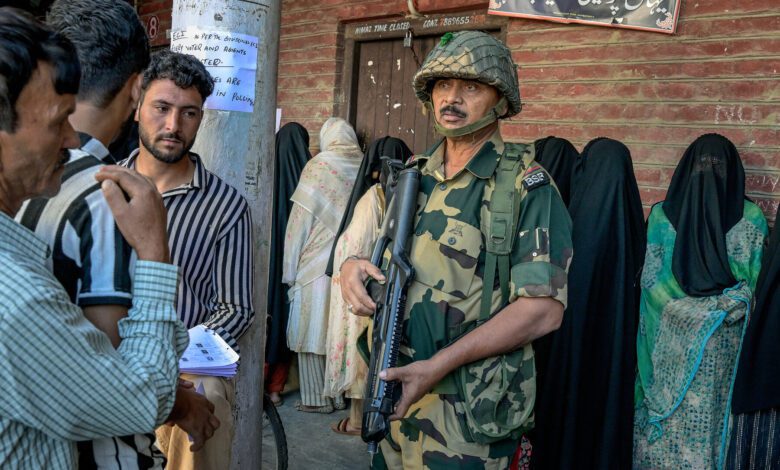
Voters in Jammu and Kashmir went to the polls on September 18, 2024 in the region’s first assembly election for a decade and its first after India’s government revoked its semi-autonomous status. The ballot restored an elected legislature, but not the powers the former state once held.
The election followed the 2019 reorganization
In August 2019, India’s Parliament ended the constitutional provisions commonly associated with Article 370 and divided the former state into the union territories of Jammu and Kashmir and Ladakh. The central government imposed sweeping security and communications restrictions during the transition.
The changes remained deeply contested by many regional parties and residents.
Twenty-four constituencies voted first
The opening phase covered 16 seats in the Kashmir Valley and eight in the Jammu region. Two later phases were scheduled for September 25 and October 1, with counting on October 8.
Officials reported turnout around 59 per cent in the first phase and said polling was peaceful.
Participation carried different meanings
Government leaders presented queues as endorsement of democracy and the post-2019 order. Many voters and opposition parties instead described the ballot as a way to demand jobs, services, dignity, restored statehood or opposition to the constitutional change.
Voting cannot be reduced to approval of every policy imposed by New Delhi.
The new assembly had constrained authority
As a union territory, Jammu and Kashmir remained subject to powers held by the centrally appointed lieutenant governor, especially over public order, police and parts of administration. Elected representatives could legislate and govern in important areas but did not recover the full authority of the pre-2019 state.
That institutional limit gave force to the question of whether Kashmiris had an effective voice.
Statehood was a major campaign issue
Prime Minister Narendra Modi and federal officials said statehood would be restored, while opposition parties demanded a clear timeline. Regional parties also challenged the removal of special status, although an assembly could not simply reverse a constitutional act upheld by India’s Supreme Court.
Promises therefore differed in what a future government could directly deliver.
Security and civil liberties shaped the context
Jammu and Kashmir has experienced insurgency, militant violence, heavy militarization and allegations of rights abuses for decades. Detentions, media restrictions and pressure on dissent after 2019 affected the environment in which political participation resumed.
Peaceful polling was significant but did not settle those broader concerns.
The region is internationally disputed
India and Pakistan each administer parts of Kashmir and claim the territory, while China controls another area. The 2024 vote concerned the Indian-administered union territory and should not be described as resolving the international dispute.
Residents themselves hold diverse political views that cannot be represented by a single slogan.
An election is necessary but not sufficient
The vote allowed residents to choose local representatives after years of rule by unelected administrators. Meaningful democratic restoration also required institutions able to act, civil liberties, accountable security, press freedom and a credible path on statehood.
Later results showed the National Conference-led alliance winning a governing mandate, but that outcome did not erase structural constraints. The election gave Kashmiris a formal channel and a visible opportunity to register priorities; whether their voice carried weight depended on how the central government, lieutenant governor and elected administration respected and implemented that mandate.
Turnout figures should therefore be reported as participation, not as a referendum on autonomy, Indian rule or any single party’s interpretation.