Pager Attacks in Lebanon Puncture Hezbollah’s Image as Powerful Anti-Israel Force
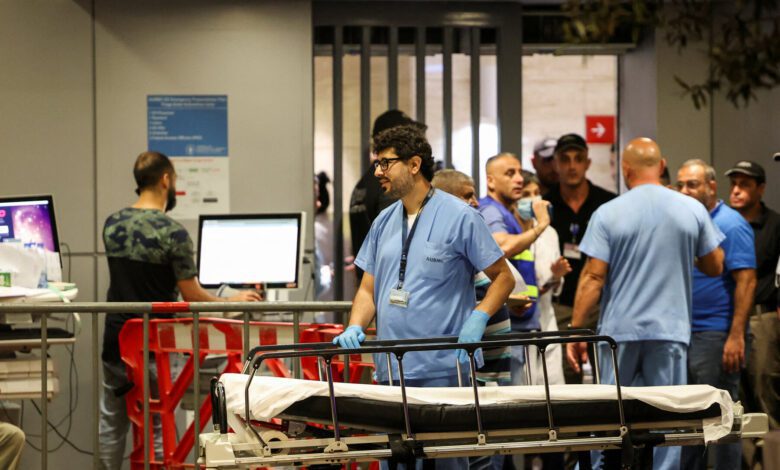
The exploding pager and radio attacks of September 17–18, 2024 delivered Hezbollah one of the most visible security breaches in its history. They disrupted communications, injured personnel across military and civilian institutions and challenged the group’s carefully cultivated image as a disciplined force able to deter Israel.
The breach reached inside trusted logistics
Hezbollah had reportedly adopted pagers to avoid the location tracking and interception risks of smartphones. If explosives were inserted before delivery, the attacker did more than intercept a message: it manipulated procurement, distribution and confidence in equipment supplied through channels the organization trusted.
That kind of compromise can force a broad and time-consuming security review.
Command and control faced immediate strain
Wounded users included people across Hezbollah’s operations, and remaining members could no longer assume that familiar devices were safe. The organization had to communicate, verify instructions and coordinate a response while questioning its own hardware.
Even intact equipment could become unusable if personnel feared turning it on.
The psychological effect extended beyond casualties
Simultaneous explosions in pockets, homes and public places conveyed that an adversary could reach individuals far from a conventional front line. Families and surrounding communities also became afraid of ordinary electronics.
This atmosphere served a strategic purpose, but civilian terror and indiscriminate effects raised serious humanitarian-law concerns.
Hezbollah was damaged, not eliminated
The group retained fighters, rockets, territorial networks, political representation and support from Iran. Analysts cautioned that even thousands of injured users represented only part of its overall organization and that alternative communications could be established.
A spectacular intelligence operation did not automatically destroy military capacity or political influence.
Its deterrence narrative nevertheless suffered
Hezbollah portrayed itself as highly security-conscious and capable of imposing costs on Israel. An adversary apparently entering its supply chain exposed weaknesses in counter-intelligence, procurement and internal compartmentalization.
The embarrassment could create pressure to retaliate in order to restore credibility.
Escalation could reverse tactical gains
An operation that penetrates an opponent may produce immediate advantage while pushing the conflict toward broader war. Hezbollah continued launching rockets, and Israel intensified military action as cross-border confrontation escalated later that month.
Strategic success must be judged by political and security outcomes, not novelty alone.
Lebanon bore costs beyond Hezbollah
Hezbollah combines an armed wing with political, social, health and media institutions embedded in civilian areas. Explosions struck people in shops, streets, homes and a funeral, injuring bystanders and overwhelming medical services.
Describing the attack only as a blow to an organization obscures harm to a country already facing economic and institutional crisis.
Attribution needed evidentiary clarity
Hezbollah blamed Israel, and reporting later widely attributed the operation to Israeli intelligence, but Israel initially neither confirmed nor denied responsibility. Headlines at the time needed to state that distinction.
The attacks punctured an image of invulnerability because of their reach and intimacy, not because they ended Hezbollah’s ability to fight. Their longer legacy depended on how the group rebuilt communications, how Israel used the intelligence advantage, how law assessed device placement and triggering, and whether the episode helped cause a wider conflict.
A balanced analysis recognizes both the operational sophistication and the civilian danger. Admiration for a technical feat cannot substitute for examining legality, proportionality and consequences for people who were not lawful targets.