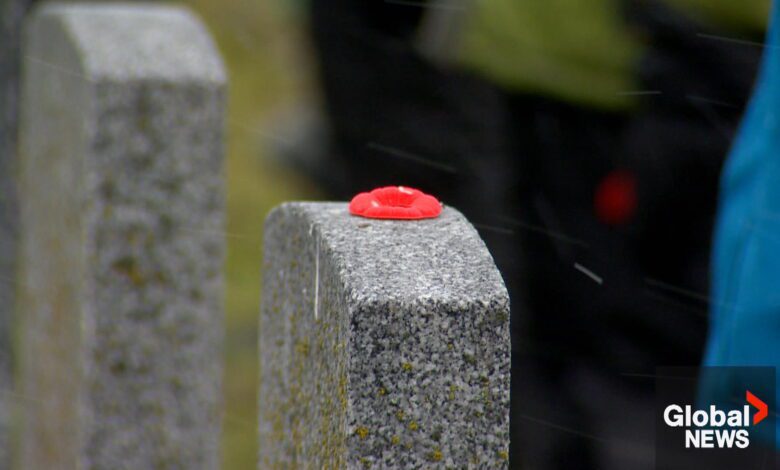
Grade 7 pupils from Humboldt Public School marched with Canadian Armed Forces members to the local cemetery on November 11, 2024 for the community’s fifth No Stone Left Alone ceremony. After studying local and military history, the students placed poppies at veterans’ graves so that remembrance became a specific encounter with names in their own community.
Learning before the ceremony
Teacher Robyn Moore said the class spent time discussing Canadian military history, visiting the local legion museum and learning about the cenotaph. Preparation mattered because laying a poppy has more meaning when a student understands whose grave it marks and why that person’s service is remembered.
The arrival of three soldiers at the school caused pupils in the hallway to stop and pay attention. Marching together linked classroom history with living members of the Armed Forces rather than presenting remembrance solely as a story about the distant past.
What No Stone Left Alone does
The programme began in Alberta and expanded to ceremonies in multiple countries. Its recognizable action is to place a poppy on each military headstone. The visual effect of red across a cemetery makes collective loss visible while preserving one marker for each individual.
Students Mattaya Pratchler and Sloane Ruel said former school employee and serving officer Michael Cleveland explained that participants across Canada were taking part. A local act was therefore connected to a larger effort without becoming anonymous.
Community names make history tangible
Cleveland, a second lieutenant and former Humboldt teacher, said plaques in his home community of Lake Lenore contained familiar names. That recognition helps students understand that service members came from schools, farms and families much like their own.
A cemetery lesson should be accurate and inclusive. Teachers can use service files and local archives to explain what is known, acknowledge Indigenous and other historically overlooked service and avoid presenting every conflict as morally simple. Remembrance can honour people while allowing careful discussion of decisions that sent them to war.
Respectful participation
Cemeteries are burial places as well as educational sites. Organizers should coordinate with custodians, protect headstones, provide accessible routes and explain that photographs or rubbings may require permission. Students need space for questions and for different family relationships to military service.
Veterans and serving personnel should not be expected to disclose traumatic experiences. Invitations to speak should include clear boundaries and support, while teachers prepare pupils to listen without demanding dramatic stories.
Beyond one day
The strongest learning continues after the poppies are placed. A class can research one named veteran, map the community at the time, preserve an interview or correct an incomplete local record. Students can also examine peacekeeping, care for injured veterans and the experiences of military families.
Moore described the ceremony as a powerful message because the pupils performed remembrance rather than watching it. Its value did not depend on making children repeat a slogan. They walked to a real cemetery, met people connected to service and encountered the scale of loss grave by grave.
No Stone Left Alone gave Humboldt’s students a disciplined way to care for public memory. The poppies would fade, but the names, questions and local history could remain with them—especially if the ceremony became the beginning rather than the end of their learning.