
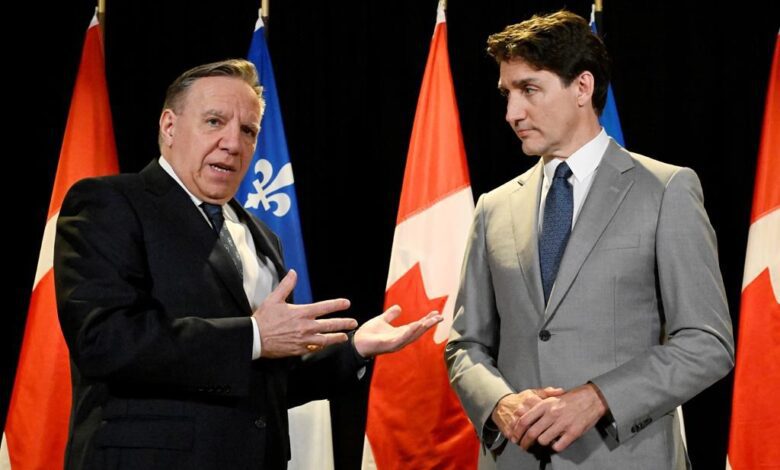
Quebec Premier François Legault urged the Bloc Québécois in September 2024 to support a Conservative no-confidence motion and help trigger a federal election. He argued that Prime Minister Justin Trudeau’s government had failed to respond adequately to Quebec’s demands on temporary immigration.
The appeal targeted two sovereigntist parties
Legault asked Parti Québécois Leader Paul St-Pierre Plamondon to press what he called his Bloc counterpart to reverse course. The provincial PQ and federal Bloc are separate organizations, though both support Quebec sovereignty and share some voters.
St-Pierre Plamondon was not empowered to direct Bloc MPs.
Temporary immigration drove the dispute
Quebec said rapid growth in asylum seekers, international students and temporary foreign workers strained housing, schools, health services and French-language integration. Legault demanded that Ottawa reduce numbers and reimburse provincial costs.
The federal government controlled many admissions but shared responsibilities with Quebec.
The confidence motion belonged to the Conservatives
Pierre Poilievre’s motion stated that the House had no confidence in Trudeau’s government. If it passed, the government would normally resign or seek dissolution of Parliament, making a federal campaign likely.
Legault’s request effectively aligned him with that immediate parliamentary tactic.
Blanchet rejected outside direction
Bloc Leader Yves-François Blanchet said he would exercise his own judgment about Quebec’s interests. His party planned to oppose the first Conservative motion while seeking concessions from the Liberals on pensions and supply management.
He did not promise continuing support for the government.
A vote against toppling the government is limited
Minority parliaments require issue-by-issue alliances. Rejecting one motion does not create a coalition or express confidence in every government decision.
The Bloc could bargain on legislation and later support another motion if negotiations failed.
The intervention also reflected Quebec politics
Legault’s Coalition Avenir Québec faced pressure from the PQ on nationalism and immigration. Challenging St-Pierre Plamondon and Blanchet allowed him to portray his government as the strongest defender of provincial demands.
That political incentive did not make the underlying capacity concerns unreal.
Government formation remains a federal matter
A provincial premier can advocate, but elected members of the House of Commons decide confidence votes. Quebec voters also hold varied views; no provincial leader can speak for all of them.
Coverage should attribute claims about the “will of Quebec” rather than state them as unanimous fact.
The immediate effort failed
The NDP and Bloc voted with the Liberals and Greens to defeat the Conservative motion 211 to 120 on September 25. Parliament continued, while disputes over immigration and the Bloc’s demands remained active.
The episode demonstrated the leverage and independence of a smaller party in a minority House. Legault could raise a substantive federal-provincial grievance and call for an election, but Blanchet controlled his caucus’s vote. Those distinct roles are essential to understanding the disagreement without reducing it to personalities.
Readers should evaluate the immigration evidence and the parliamentary tactic separately, because agreement on one does not require agreement on the other.
That separation also keeps legitimate debate from becoming a misleading claim that an election was the only possible policy response.



