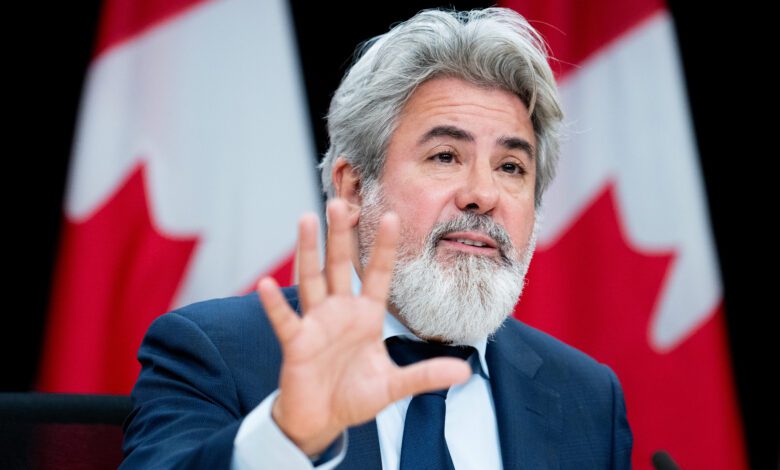
Pablo Rodriguez resigned as Canada’s transport minister and Quebec lieutenant on September 19, 2024, then left the federal Liberal caucus to pursue the leadership of the Quebec Liberal Party. The Montreal MP said he would sit as an independent while preparing his provincial campaign.
The move crossed political levels
Rodriguez had represented the federal riding of Honoré-Mercier and held senior posts in Justin Trudeau’s cabinet. The Quebec Liberal Party is a distinct provincial organization, not a branch of the federal Liberal Party.
Seeking its leadership required a transition out of his federal roles.
He relinquished two cabinet responsibilities
As transport minister, Rodriguez oversaw federal policy involving rail, aviation, marine transport and road-safety regulation. As Quebec lieutenant, he helped coordinate the government’s political strategy and communication in the province.
Both functions needed reassignment while Parliament was sitting.
A small cabinet shuffle followed
Prime Minister Trudeau assigned Steven MacKinnon the transport portfolio while MacKinnon continued as labour minister. Public Services and Procurement Minister Jean-Yves Duclos took on the Quebec lieutenant role.
The limited reshuffle avoided promoting a new cabinet member for an interim vacancy.
Rodriguez sat outside the governing caucus
Leaving the Liberal caucus gave him organizational separation for a Quebec-focused campaign. He still remained an elected member of Parliament until a later resignation and retained the responsibilities that accompany that office.
Independent status did not immediately create a by-election.
The Quebec Liberals were rebuilding
The provincial party was searching for a permanent leader after poor election results and Dominique Anglade’s departure. It remained a major opposition force but faced competition from the governing Coalition Avenir Québec, Parti Québécois and Québec solidaire.
Rodriguez offered cabinet experience and a Montreal political base.
A leadership bid is not an appointment
At the time of his resignation, Rodriguez was declaring his intention to compete. Party members would determine the winner under the provincial leadership process.
Coverage should not describe a prospective candidate as though he had already secured the office.
The federal timing mattered
The resignation came as the minority Liberal government faced Conservative confidence motions and pressure from opposition parties. Losing an experienced Quebec minister added to questions about caucus renewal, although replacement appointments preserved cabinet operations.
One departure alone did not change the House’s seat arithmetic.
Later developments should be dated clearly
Leadership contests and parliamentary plans can change after an initial announcement. An article anchored to September 19 should separate what Rodriguez said that day from later voting results or career decisions.
The verified event was a voluntary political transition: he left cabinet and caucus, continued temporarily as an independent MP and shifted his attention to Quebec’s provincial Liberal leadership. It was not a merger of the two Liberal parties, a dismissal by Trudeau or immediate proof of the leadership outcome.
Any later profile should update those milestones explicitly rather than silently blending them into the original announcement.
It should also preserve the difference between leaving cabinet, leaving a caucus and resigning an elected seat.
Those events can occur on separate dates and carry different consequences for representation, salary and parliamentary voting.