
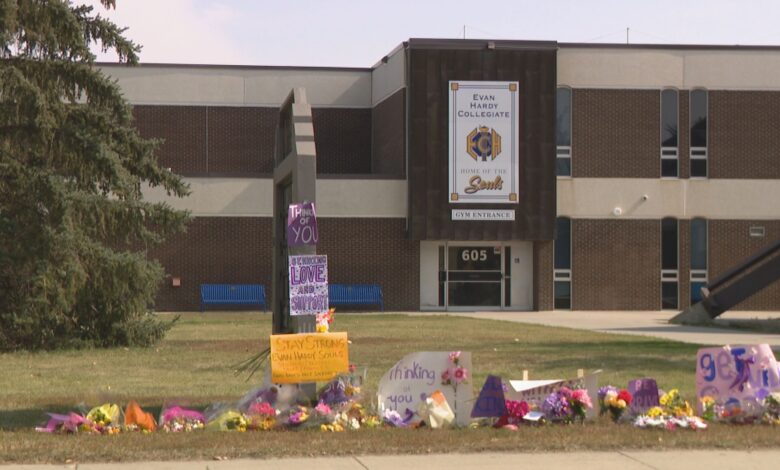
A 14-year-old girl accused of setting a 15-year-old classmate on fire at Evan Hardy Collegiate in Saskatoon faced an additional charge in September 2024. The new allegation of unlawfully causing bodily harm joined attempted murder, aggravated assault and arson charges arising from the September 5 attack.
The victim suffered severe burns
Witnesses said a liquid was poured on the older student in a school hallway and ignited. A teacher intervened to extinguish the flames and was also injured.
The victim was transferred to an Edmonton hospital, and her family described a long recovery ahead.
Police arrested the accused at the school
Officers responded to emergency calls and took the younger student into custody. Investigators secured the scene, interviewed witnesses and examined the substance and ignition source.
The filing of several offences did not mean there would be a conviction on each count.
Youth identity was legally protected
Canada’s Youth Criminal Justice Act generally prohibits publishing information that identifies a young person accused of an offence. Restrictions may also protect a victim or child witness.
Students and social-media users should not post names, photographs, class schedules or details that indirectly identify either girl.
Charges are allegations
The accused was entitled to the presumption of innocence and a fair hearing. Prosecutors needed to prove the elements and mental state required for each offence beyond a reasonable doubt.
Public anger cannot substitute for evidence or determine sentence.
The school community needed support
Students witnessed an extraordinary act of violence in a place expected to be safe. School officials made counselling and crisis support available and had to plan a careful return to classes.
Rumour control and age-appropriate communication can reduce additional trauma.
Safety review should be evidence-based
Administrators can examine prior warnings, supervision, emergency response, access to accelerants and how quickly staff acted. Such a review should not become intrusive collective punishment of students.
Clear reporting channels and trained intervention teams matter more than theatre.
The case later produced a sentence
The young person was ultimately sentenced to three years for attempted murder, the maximum youth sentence reported for the offence under the circumstances. Later developments should be stated with their dates and without defeating statutory identity protections.
The outcome does not make every early allegation retroactively proven at the article’s publication time.
Responsible coverage avoids spectacle
The method of attack is relevant, but repeated graphic descriptions or video could harm the victim and inspire imitation. Reporting should centre recovery, lawful process and practical school safety.
The additional charge was a procedural development in a devastating case. The durable public interest lies in supporting the injured student and witnesses, understanding preventable failures, protecting youth privacy and reporting the court outcome accurately—not exposing children to online identification or turning their trauma into entertainment.
Any discussion of punishment should use the Youth Criminal Justice Act accurately and avoid false claims that a youth record automatically vanishes at age 18. Access periods depend on offence, sentence and later conduct.
The victim’s later medical condition should come from her family or authorized sources, not classmates’ speculation. Protecting that boundary allows necessary public discussion of school safety without making recovery a continuing public performance.



