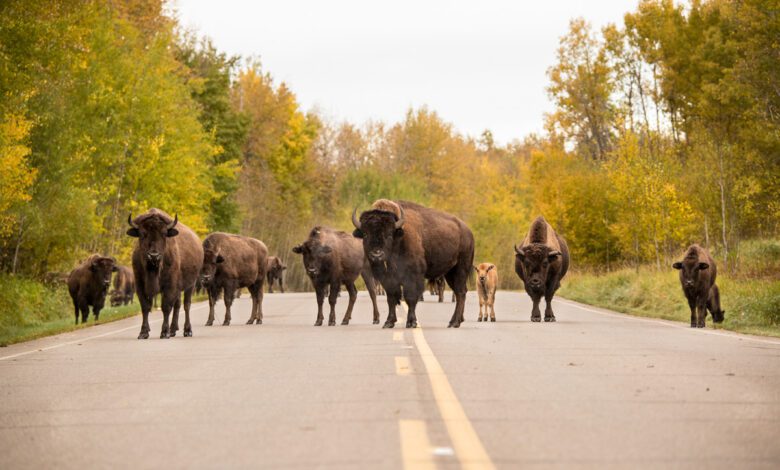
Five plains bison died after two pickup trucks struck the same herd in heavy fog at Elk Island National Park east of Edmonton early on September 19, 2024. Three animals died at the scene and two were euthanized because of severe injuries.
The collisions occurred near the entrance
Fort Saskatchewan RCMP responded around 4 a.m. The two drivers remained at the scene, and emergency medical personnel attended; no vehicle occupant was reported injured.
Police said alcohol and excessive speed were not factors in these particular crashes.
Visibility was severely reduced
Heavy fog was identified as a major factor. A large dark animal can become visible only within stopping distance when headlights reflect from moisture and the road is unlit.
Driving at the posted limit can still be too fast for conditions when sight distance is short.
The animals belonged to one herd
Parks Canada identified three young females, one young male and one middle-aged male. Losing several ages and sexes in one event can affect a herd beyond the simple count.
Wildlife managers, not motorists or bystanders, made the decision to euthanize the gravely injured animals.
Bison present exceptional collision risk
They are massive, may stand or move together on a roadway and can behave unpredictably when startled. Drivers should not honk, crowd or leave vehicles to push them away.
Stopping at a safe distance and waiting for animals to clear is usually the safer response.
The park had a broader mortality concern
At least six bison were killed by vehicles between 2020 and 2023. Digital signs also recorded extreme speeding, including 144 kilometres per hour in a 40-kilometre zone, although police excluded speed in the September crashes.
Past speeding data should not be misapplied to the two drivers involved here.
Mitigation already included traffic calming
The park installed speed bumps and electronic speed feedback signs. Additional options include lighting designed for wildlife settings, fog warnings, temporary closures, enforcement and targeted education at entry points.
Every intervention has effects on habitat, visitor access and emergency travel that require evaluation.
Drivers must adapt to conditions
Low beams, increased following distance and a speed that permits stopping within the visible road are basic fog precautions. If visibility becomes unsafe, a driver should leave the travel lane at a designated safe location rather than stop unpredictably.
Wildlife can appear at any hour, especially around dawn and dusk.
The incident required specific and general lessons
The verified cause context was dense fog, not alleged impairment or speeding. The wider park record still showed a need for slower, alert travel and continued engineering.
Accurate reporting can hold both points together: avoid blaming the involved drivers without evidence, while treating five bison deaths as a serious signal to review how road design, warnings and visitor behaviour protect a nationally important herd.
Park visitors should report injured wildlife to staff and remain in their vehicles. Approaching a wounded bison endangers both the public and responders. Collision reviews should publish feasible countermeasures and then measure whether animal deaths decline, rather than allowing attention to fade after a single incident.