
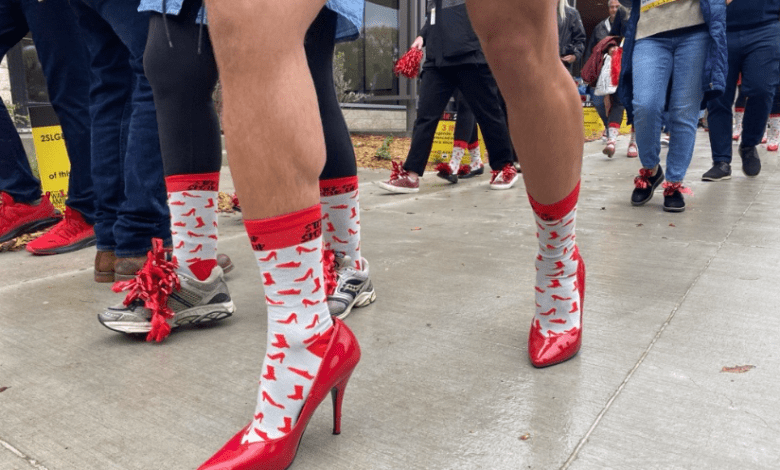
More than 260 people joined YWCA Regina’s 2024 Walk a Mile in Their Shoes event to recognize survivors of domestic abuse and raise money for shelter. Participants helped collect more than C$60,000 for the YWCA’s Isabel Johnson Shelter.
The event used a visible symbol
Many participants walked in red high heels as a public expression of solidarity. Symbolic events can start conversations and attract donations, but organizers increasingly emphasize that anyone can participate without reducing violence to footwear or gender stereotypes.
Survivor dignity should remain more important than spectacle.
Saskatchewan’s rate was persistently high
The most recent Statistics Canada comparison at the time placed Saskatchewan highest among provinces for police-reported intimate-partner and family violence. The pattern had continued for years.
Police data capture reported incidents and enforcement practices, not every experience; many survivors never contact police.
Community organizations joined the walk
Sofia House and the Provincial Association of Transition Houses and Services of Saskatchewan were among partners present. Their work includes emergency accommodation, safety planning, advocacy and connections to legal and financial supports.
Awareness has greater value when people leave knowing how to reach those services.
Shelter is an immediate safety need
The Isabel Johnson Shelter provides a protected place for women and families escaping violence. Donations support staffing, food, transportation, children’s needs and other practical costs that can determine whether someone can leave safely.
A bed alone is not enough without confidentiality and trauma-informed support.
Abuse is broader than physical assault
Coercive control can include isolation, threats, surveillance, financial restriction, sexual violence and manipulation. Risk may increase around separation, so confronting an abusive partner or announcing a departure without planning can be dangerous.
Specialist advice should guide friends who want to help.
Support begins with belief and choice
A listener can acknowledge what the person says, avoid blame, ask what support feels safe and offer contact with local services. They should not publish details, demand immediate police action or make decisions on the survivor’s behalf.
In immediate danger, emergency services remain appropriate.
Prevention requires institutional action
Schools, workplaces, health providers, courts and police can identify risk, respond consistently and hold perpetrators accountable. Affordable housing, income support, child care and pet-safe options reduce barriers to leaving.
Programmes for people who use violence need evidence, monitoring and survivor-centred safeguards.
A walk is a starting point
The turnout and funds demonstrated community commitment, but lower violence rates depend on stable services and policy throughout the year. Organizers and governments should report how money is used and where demand exceeds capacity.
Anyone seeking help in Saskatchewan can use 211 and established victim-service or shelter directories; emergency danger warrants 911. Clearing browsing history or using a safer device may be necessary where an abuser monitors technology. Publishing those practical routes turns awareness into a possible path to safety.
Friends and relatives should remember that leaving can be the most dangerous period. Confidential safety planning, document storage, transportation and contact with trained advocates are more useful than ultimatums. Responsibility for abuse always remains with the person choosing to use violence, never with the survivor.



