As Crisis Builds, Lebanon’s Government Is Nowhere to Be Found
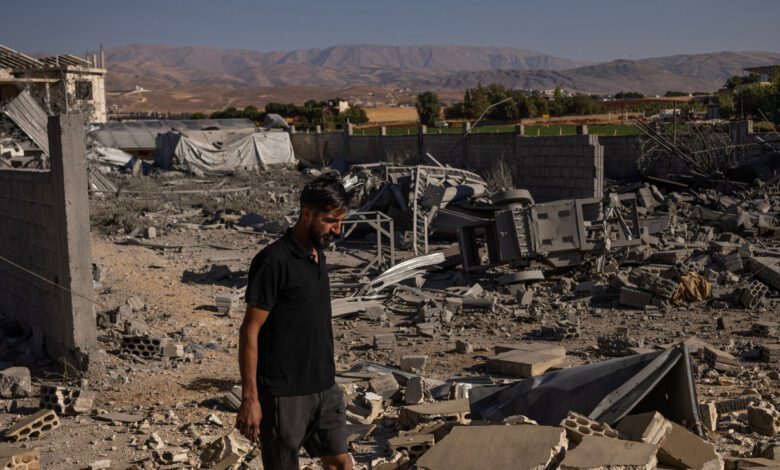
Lebanon entered the most dangerous phase of its 2024 conflict without a president, with a caretaker cabinet and with state institutions weakened by years of economic collapse. The government was not literally absent—ministries and a crisis unit responded—but it lacked the authority, resources and unified armed power needed for a disaster displacing around one million people.
The presidency had been vacant for two years
Michel Aoun’s term ended in October 2022, and Parliament repeatedly failed to elect a successor. Lebanon’s sectarian power-sharing system reserves the presidency for a Maronite Christian, the premiership for a Sunni Muslim and the speakership for a Shiite Muslim.
Political blocs could block a quorum or candidate without agreeing on an alternative, leaving the top office empty during a national emergency.
The cabinet had limited status
Najib Mikati led a caretaker government because political leaders had not formed a fully empowered successor after the 2022 election. Caretaker administrations can manage urgent affairs but avoid major long-term decisions that may exceed their mandate.
Mikati called for a ceasefire and implementation of UN Security Council Resolution 1701, including deployment of the Lebanese army in the south.
Hezbollah operated beyond ordinary state control
Hezbollah was a political party, social organization and Iran-backed armed group with capabilities greater than those of many national forces. It began firing toward Israel on October 8, 2023, saying it supported Hamas in Gaza.
Israel responded with strikes, and the exchange escalated dramatically in September 2024. The Lebanese government did not make or effectively control Hezbollah’s battlefield decisions.
Economic collapse had hollowed out institutions
Since 2019, currency failure and banking restrictions had impoverished households and reduced public-sector salaries. The army relied partly on foreign support to retain personnel and basic operations.
Hospitals, schools and municipalities entered the conflict with limited reserves. A weak state cannot rapidly create shelter, transport and health capacity for hundreds of thousands of displaced people.
A humanitarian response did take shape
The government crisis unit coordinated with municipalities, UN agencies and charities. Public schools became shelters, while families and community groups absorbed many people fleeing the south, Bekaa Valley and Beirut’s southern suburbs.
The response was uneven and overwhelmed, but describing it as nothing erases the work of civil servants, medical staff and volunteers operating within severe constraints.
Civilians carried overlapping crises
Lebanese residents faced airstrikes and displacement, while the country continued to host a large Syrian refugee population and Palestinian communities. Housing, food, medicine and sanitation were strained.
Collective blame based on sect, nationality or presumed political allegiance increased the danger to people seeking safety.
State leadership was restored in 2025
Parliament elected army commander Joseph Aoun president in January 2025, ending the vacancy. Nawaf Salam became prime minister and formed a government the following month.
Those appointments restored constitutional offices but did not instantly repair finances, disarm non-state forces or rebuild war damage.
The crisis exposed a sovereignty gap
Lebanon had formal institutions, dedicated responders and an internationally recognized government. It lacked a coherent state monopoly over force and the fiscal capacity to protect the population at the necessary scale.
The headline’s frustration was understandable, but the accurate conclusion is more precise: the government was present yet structurally incapacitated. Lasting recovery requires accountable institutions, stable public finance, humanitarian support and political arrangements under which decisions of war and peace are made by the state rather than imposed on citizens by external powers or armed factions.