Transport Canada published more than 20 vehicle recalls over several days in September 2024, covering General Motors, Land Rover, Volvo and other manufacturers. The defects ranged from missing warnings and failed cameras to loose wheel hardware, so owners needed to check an exact vehicle identification number rather than rely on model names alone.
General Motors had the largest group
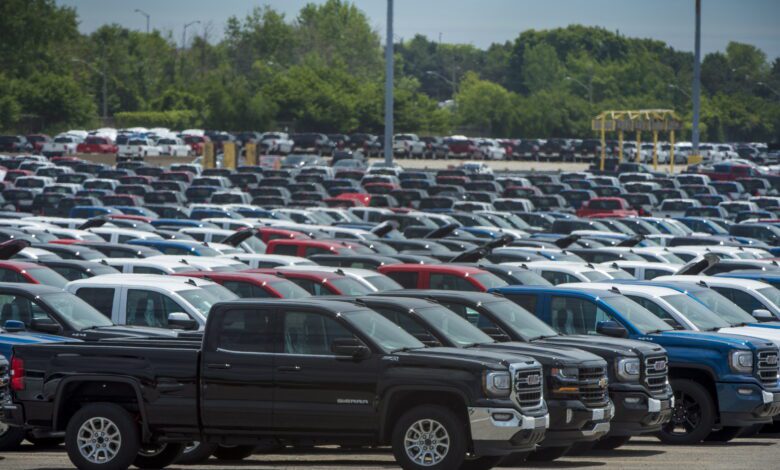
Notices covered selected Cadillac Escalade, Chevrolet Silverado and Tahoe, and GMC Yukon, Sierra and Suburban vehicles, along with a 2024 GMC Canyon notice. A software defect could prevent the low-brake-fluid warning lamp from illuminating.
If fluid fell too low without warning, braking performance could be reduced and crash risk could increase.
Land Rover cameras could reset
Certain Range Rover Evoque, Velar and Sport vehicles had a near-field sensor module that could overheat. The surround-camera system could then reset and fail to display images.
Drivers must still look around the vehicle, but mandatory camera systems are safety equipment and should function as designed.
Jeep wiring could affect two signals
Some Wrangler models had an improperly installed harness for the rearview camera and high-mounted stop lamp. A wiring failure could remove the camera image or brake-light function.
Intermittent operation does not mean a defect is harmless; owners should follow the recall instructions.
A Volvo truck notice involved wheel nuts
On certain 2024 Volvo VN heavy trucks, left-side lug nuts may not have been tightened correctly. Loose fasteners can allow a wheel to separate, creating danger for the truck and surrounding traffic.
Fleet operators should use the manufacturer’s inspection procedure rather than merely retightening without specifications.
Other software affected driver information
A Maserati GranTurismo defect could display the wrong fuel level, increasing the risk of running out unexpectedly. Certain Jaguar F-Pace vehicles also faced surround-camera resets.
Modern recalls increasingly involve software, but the resulting hazards remain physical.
A model year is not sufficient identification
Recalls usually cover production ranges, plants, components or configurations, not every vehicle carrying a badge. Owners can search Transport Canada’s recall database or a manufacturer’s portal using the 17-character VIN.
Dealers can confirm applicability and whether a repair is already recorded.
Recall repairs are generally provided without charge
Manufacturers notify registered owners and instruct them to book inspection, software update or component replacement. Address changes and used-vehicle sales can prevent letters from reaching the current driver.
Owners should independently check rather than wait indefinitely for mail.
Urgency depends on the notice
Some recalls permit continued use until an appointment; others include parking, towing or stop-driving directions. Warning lamps, braking changes, loose wheels or failed safety systems warrant prompt attention.
The September list was not one “big recall” with a single remedy. It was a collection of distinct safety actions. The safest response is to verify the VIN, read the official notice and complete the specified repair while retaining service documentation.
Used-vehicle buyers should perform the same check before completing a purchase, ask about every open safety campaign and confirm completed work through invoices or a manufacturer’s authorized dealer service record.