Saskatchewan New Democrats challenged Scott Moe’s 2024 campaign promise of personal income-tax relief by arguing that the governing Saskatchewan Party had previously increased 31 taxes and fees in a single year. The attack drew on real post-election tax changes, but its wording blurred an important leadership timeline.
The dispute followed a new tax promise
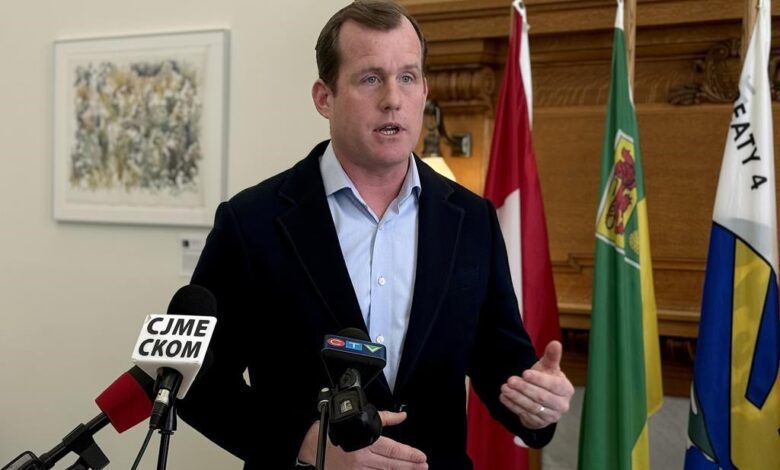
Moe said a re-elected Saskatchewan Party government would raise personal income-tax exemptions and credits, presenting the measure as broad affordability relief. New Democratic Party candidate Trent Wotherspoon responded that voters should judge the promise against the government’s earlier record.
Wotherspoon said the Saskatchewan Party campaigned on tax cuts in 2016 and then raised taxes and fees after winning. He argued that this record made the 2024 offer unreliable.
The largest changes came in 2017
The 2017 provincial budget increased the provincial sales tax from five per cent to six per cent and expanded the tax base to additional goods and services. It also changed several credits and fees as the government attempted to address a large deficit after a fall in resource revenue.
Those measures had wide household and business effects and provide a factual basis for criticism that the governing party increased the cost of taxed purchases.
Scott Moe was not yet premier
Brad Wall was premier when the 2017 budget was introduced. Moe served in the Saskatchewan Party cabinet and became premier in February 2018 after winning the party leadership.
It is therefore imprecise to say Moe personally raised all 31 items “while premier” if the count refers to the 2017 package. It is accurate to hold him politically accountable for the continuing record of the government he later led, but those are not the same claim.
The number 31 also needs a list
A campaign total can combine taxes, user charges, licence costs and fee adjustments that differ greatly in size and purpose. One percentage-point PST increase has a different fiscal and household effect from an administrative fee.
Voters can assess the assertion only when the party publishes the underlying items, dates and estimated impact. Repeating a total without that table turns a potentially verifiable critique into rhetoric.
The NDP offered its own affordability plan
Carla Beck’s party promised not to increase major provincial taxes, to suspend the gasoline tax and to remove PST from children’s clothing and some grocery items. It said improved management, economic growth and reduced waste would support its commitments.
Those promises required the same scrutiny applied to Moe’s plan: the cost of foregone revenue, duration of relief and effect on public services all mattered.
Tax changes should be compared as packages
An income-tax credit, sales-tax exemption and fuel-tax suspension reach households differently. Income-tax reductions may be most valuable to people with tax payable; sales-tax changes appear at purchase; fuel-tax relief primarily helps drivers.
A complete comparison also includes spending and debt. A tax cut funded by borrowing shifts cost into the future, while one funded by service reductions may affect the same household through longer waits or higher private expenses.
Voters returned Moe’s party
The Saskatchewan Party won another majority in the October 28 election, although the NDP made substantial gains and became a larger opposition. The result gave Moe authority to pursue his tax programme but did not resolve debate over the earlier record.
The corrected record is stronger than the slogan
The NDP’s central argument—that Saskatchewan Party tax relief should be weighed against significant earlier increases—was a fair subject for the campaign. The specific description of 31 increases “while Moe was premier” was not well aligned with the 2017 chronology.
A trustworthy account preserves both facts. The Saskatchewan Party enacted major tax changes after the 2016 election; Brad Wall was premier at the decisive 2017 budget; Moe was a cabinet member and later led the same government. Readers can then decide how much responsibility to assign without the article converting a party allegation into an undisputed fact.