
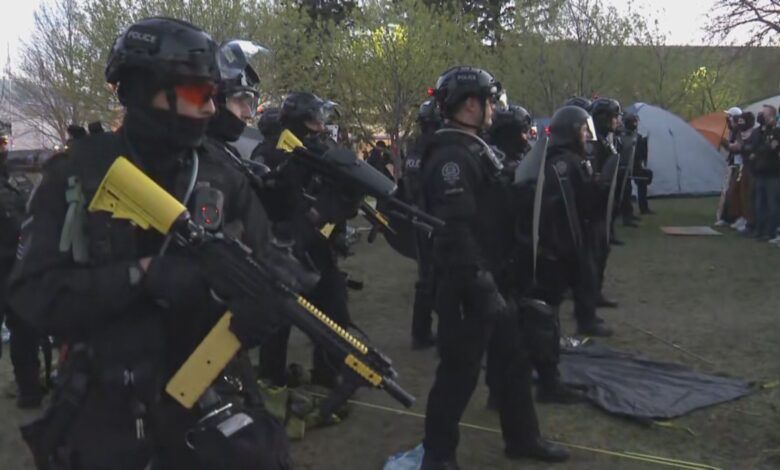
Several Calgary groups supporting Palestinians demanded independent scrutiny of police conduct at demonstrations in 2024. They alleged discriminatory enforcement and excessive force; the Calgary Police Service disputed that description and said officers responded to safety risks and failures to cooperate with lawful directions.
Four groups presented the complaint
Representatives of Justice for Palestinians, Independent Jewish Voices Calgary, the Watermelon Foundation for Justice and the Calgary Student Movement spoke publicly about what they described as a pattern of unequal treatment.
Their allegations were claims requiring investigation, not findings already established by a court or oversight body.
A September rally produced tickets and arrests
Police issued 12 tickets and arrested three people during a September 15 gathering at Tomkins Park on 17th Avenue. Organizers characterized the protest as peaceful and said enforcement was disproportionate.
CPS said organizers had declined attempts to coordinate a safe event and that intervention protected demonstrators, motorists and the surrounding community.
An earlier university encampment shaped distrust
In May, protesters established an encampment at the University of Calgary seeking disclosure and divestment related to Israel. Police cleared the site after the university asked people to leave.
Organizers said participants were already dismantling tents; police said objects were thrown and officers used non-lethal weapons during the confrontation.
The groups sought records
Protest organizers filed freedom-of-information requests seeking details about decisions, command responsibility and enforcement. Records can help establish timelines, instructions and whether comparable events received similar treatment.
Disclosure can still be limited to protect personal information, active investigations or legally privileged advice.
Formal oversight channels were available
The groups called on the Calgary Police Commission to examine the service’s conduct and said they were considering lawsuits and human-rights complaints. Complaints about individual officers can also follow Alberta’s statutory police-oversight process.
Different forums answer different questions: discipline, discrimination, civil damages and policy accountability are not identical.
Police pointed to rising protest activity
CPS reported a 260 per cent increase in protests, rallies and demonstrations since 2019. It counted 572 events between January 2023 and May 2024, with 238 requiring some police intervention.
Those aggregate numbers describe workload but do not prove that any specific use of force or ticket was justified.
Protest rights have lawful limits
Freedom of expression and peaceful assembly protect unpopular political messages. Police may nevertheless address violence, threats, blocked emergency access and other offences, provided restrictions are lawful, necessary and applied without viewpoint discrimination.
Clear communication and de-escalation reduce the risk that disagreement becomes a physical confrontation.
Independent evidence should decide the dispute
Body-camera recordings, radio logs, officer notes, civilian video, ticket outcomes and witness accounts can be compared rather than accepting either side’s narrative wholesale. Aggregate enforcement data may also reveal whether similar conduct is treated consistently.
Accountability does not require assuming police guilt, and public safety does not require dismissing protester testimony. A credible review should publish its mandate, protect due process and explain how each contested decision met legal and operational standards.
Publishing final ticket and complaint outcomes would also show whether initial enforcement survived independent review.



