
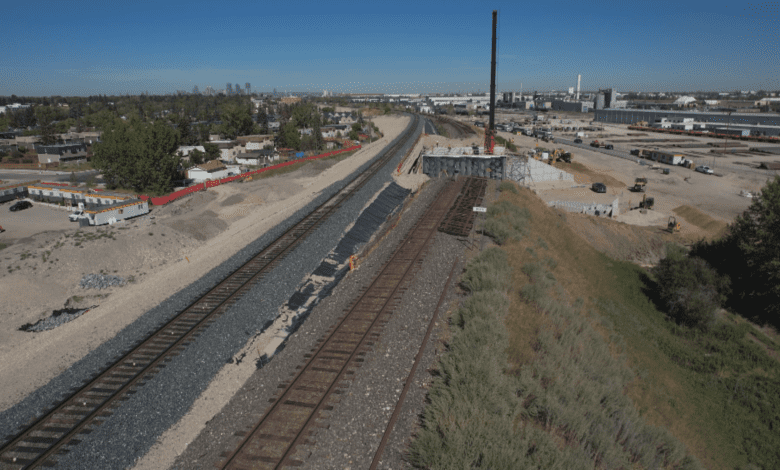
Calgary Mayor Jyoti Gondek and Alberta Premier Danielle Smith met on September 20, 2024, seeking a way to preserve Green Line work after city council voted to wind down the LRT project. Their immediate concern was avoiding needless contract cancellations while governments argued over route, cost and control.
The project had reached a breaking point
Calgary approved a shortened first phase with a budget of C$6.2 billion after costs increased by more than C$700 million. Alberta then withdrew its C$1.53-billion commitment, saying it would not support the city’s proposed alignment.
Without provincial funding, council concluded it could not proceed under the approved plan.
The province opposed the downtown tunnel
Smith’s government wanted a different route that avoided tunnelling through the downtown core and promised to commission engineering work for an above-ground alternative. The city warned that redesign would create delay, cost and ridership trade-offs.
Neither alignment could be fairly compared without equivalent engineering, risk and demand assumptions.
Existing contracts created urgency
Design, utility relocation, vehicles and construction packages had already been awarded or negotiated. Terminating them could trigger penalties, strand completed work and damage Calgary’s credibility with firms bidding on future infrastructure.
Preservation also carried cost if retained work no longer fit the final route.
The meeting reopened direct communication
Gondek and Smith described their discussion as productive and agreed officials should determine which contracts and design work remained useful. A joint working process offered a chance to separate recoverable project assets from sunk costs.
Positive language did not amount to approval of a new line or restoration of funding.
Three governments were financially involved
Ottawa had committed federal transit funding, Alberta controlled its provincial contribution and Calgary bore local costs and delivery responsibility. A revised business case would have to satisfy federal programme requirements and deadlines.
Each delay increased the risk that inflation and expiring approvals would consume money intended for construction.
The line served a long-term transport goal
The Green Line was intended as a north-south transit spine connecting growing communities with employment and other rail lines. Supporters cited mobility, housing and emissions benefits; critics questioned whether the shortened stage justified its price.
Ridership projections should be updated when scope and station locations change.
Later negotiations preserved part of the work
City and provincial officials eventually agreed to continue design and maintain selected contracts while developing a revised alignment. That reduced immediate cancellation losses but did not erase disagreements over who accepted future cost risk.
Public disclosure was limited because negotiations involved commercially sensitive contracts.
Success required more than keeping invoices alive
A salvage plan needed an agreed route, credible capital and operating costs, ridership evidence, governance and a transparent account of discarded work. Preserving contracts was useful only where deliverables still advanced that plan.
The September meeting prevented an immediate clean break. Its real value depended on converting political dialogue into a buildable project whose benefits, costs and responsibilities Calgarians could inspect before governments committed further billions.
Regular public cost and schedule updates would make that inspection meaningful.



