U.N. Meets Amid a Backdrop of Growing Chaos and Violence
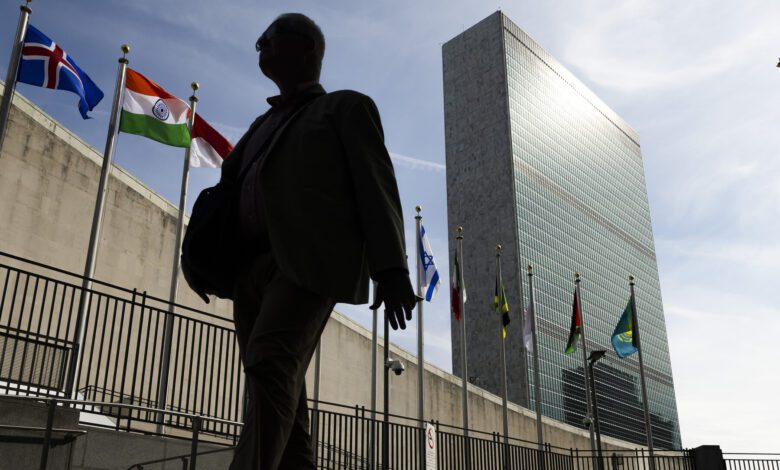
World leaders arrived in New York for the United Nations’ September 2024 high-level meetings while wars in Gaza, Ukraine and Sudan, escalating Israel–Hezbollah fighting, displacement and climate emergencies tested the institution’s ability to coordinate action. The gathering combined the Summit of the Future with the General Assembly’s annual debate.
The immediate landscape was unusually severe
Russia’s invasion of Ukraine continued without a negotiated end. Gaza’s population faced mass death, destruction and humanitarian deprivation after the Hamas-led October 7 attack and Israel’s military campaign. Sudan’s civil war displaced millions and created acute hunger.
Other crises in Haiti, Myanmar, the Sahel and the Democratic Republic of the Congo received less sustained attention despite major civilian harm.
Security Council division limited enforcement
The five permanent members possess veto power, and geopolitical alignments repeatedly blocked or weakened responses. Russia was itself a party to the Ukraine war, while the United States protected Israel from some measures and China resisted precedents it viewed as intervention.
The General Assembly can mobilize opinion and set norms but cannot exercise the Council’s binding enforcement powers.
The Summit of the Future addressed structural problems
On September 22, states adopted the Pact for the Future, accompanied by a Global Digital Compact and a declaration on future generations. The documents covered peace, sustainable development, international finance, technology governance and reform.
Adoption created political commitments rather than an automatic budget or enforcement mechanism.
Developing countries sought a fairer system
Many governments argued that the Security Council and global financial institutions reflected power arrangements from 1945 rather than today’s population and economy. Debt burdens and limited access to affordable finance constrained climate and development investment.
Reform proposals had to overcome resistance from states benefiting from the existing structure.
Climate action competed with armed conflict
Extreme heat, floods, drought and rising seas continued while military crises dominated diplomacy. Small island states emphasized that climate change threatened their territory, economies and survival even though they contributed little to global emissions.
Promises required national emissions reductions, adaptation finance and credible measurement after leaders returned home.
Artificial intelligence entered the governance agenda
The digital compact sought broader cooperation on connectivity, data and AI. Countries differed over regulation, surveillance, corporate power and access to technology.
A global framework would have to protect human rights while giving lower-income states a role in standards and benefits.
The UN still performed indispensable work
Political paralysis did not erase humanitarian agencies, peacekeepers, investigators, health programmes and technical bodies operating around the world. Their staff often worked in dangerous conditions and depended on voluntary funding and member-state access.
Criticism of institutional failure should distinguish the Security Council from the wider UN system.
Speeches needed measurable follow-through
The test was whether governments would fund relief, obey the Charter, protect civilians and accept rules when inconvenient. Calls for multilateralism ring hollow when the same state obstructs accountability for an ally or itself.
The 79th session opened against genuine chaos, but it also offered a forum where nearly every country could state its case and negotiate common text. The Pact for the Future was a starting point. Its credibility would depend on implementation in budgets, treaties and conduct during the conflicts that exposed the gap between the UN’s principles and member states’ choices.