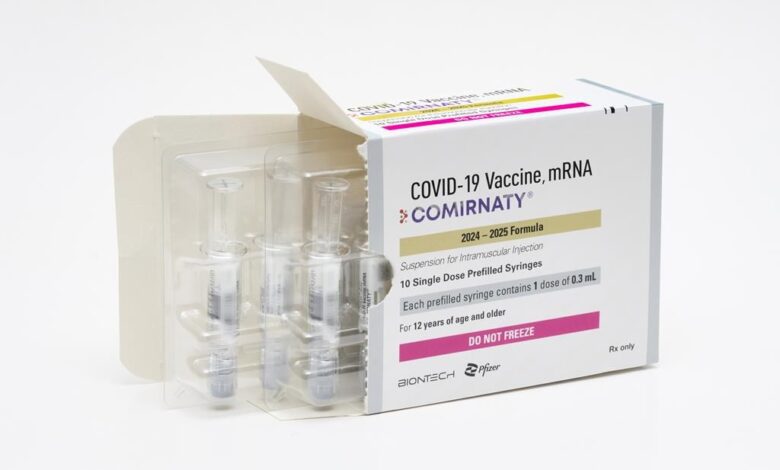
Health Canada authorized Pfizer-BioNTech’s updated Comirnaty COVID-19 vaccine on September 24, 2024. The mRNA formulation targeted the Omicron KP.2 strain and replaced the company’s earlier XBB.1.5 version for the 2024–25 respiratory-virus season.
What authorization meant
The regulator reviewed the manufacturer’s evidence for quality, safety and immune response before issuing authorization with continuing terms and conditions. The product was indicated for active immunization against COVID-19 in people six months of age and older, with age-specific doses and schedules described in the product monograph and public-health guidance.
Authorization did not mean the vaccine prevented every infection or that it was the correct product for every person. Vaccination was intended primarily to reduce the risk of severe illness and complications. Provincial and territorial programs determined availability, timing and which groups were prioritized.
Why the strain was updated
SARS-CoV-2 continues to evolve. Updating the encoded spike protein can improve how closely vaccine-induced immunity matches circulating variants, in a way conceptually similar to periodic influenza-vaccine updates. KP.2 was a descendant of the JN.1 lineage that circulated during 2024.
A strain update does not erase immunity from earlier vaccination or infection, and laboratory measurements do not translate into a guaranteed level of protection for an individual. Age, health, time since the last dose and previous infection all influence the immune response.
Safety and individual decisions
Common short-term reactions to mRNA vaccination can include pain at the injection site, fatigue, headache, muscle aches, chills and fever. Serious reactions are uncommon. People with a history of severe allergy to a vaccine ingredient, a previous vaccine-associated reaction or a specific medical condition should discuss current guidance with a qualified health professional.
Possible adverse events can be reported through a health-care provider and the Canadian vaccine-safety system. A report after vaccination does not by itself prove the vaccine caused the event; surveillance is used to identify patterns that need investigation.
Historical status of this formulation
The article records a September 2024 regulatory decision. COVID-19 formulations are replaced as the virus and recommendations change. Health Canada’s current immunization material now lists the 2024–25 KP.2 Comirnaty product among earlier mRNA formulations that are no longer authorized or available, with later strain formulations taking its place.
Readers should therefore not use this archived announcement to choose a dose in a later season. Current federal guidance, the product offered by a provincial program and advice from a health professional are the appropriate references.
The verified historical point is that Health Canada authorized the KP.2-targeting Comirnaty vaccine on September 24, 2024 after regulatory review. That decision supported the 2024–25 campaign; it was not a permanent endorsement of one strain composition for all future years.
Vaccination also works alongside, rather than replacing, other measures such as staying home when acutely ill, improving indoor ventilation and following public-health advice during outbreaks. People at higher risk may have different recommendations from healthy adults, and treatment eligibility is a separate clinical question. Anyone with symptoms or a recent exposure should use current testing and medical guidance instead of assuming a 2024 vaccine announcement answers a present-day situation.