
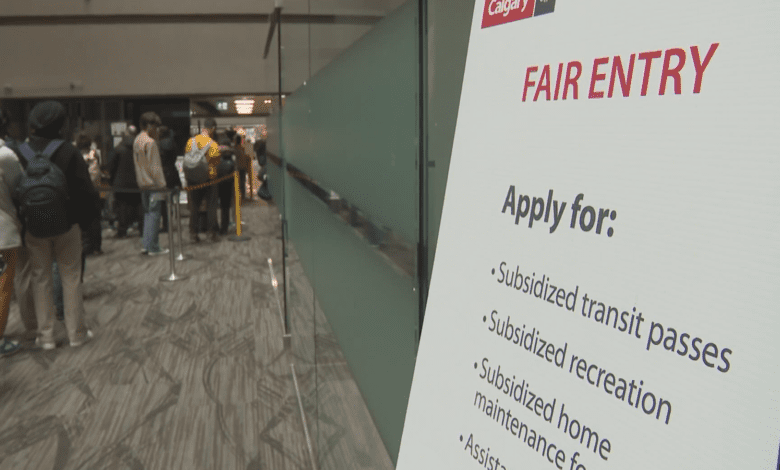
Calgary advocates warned in September 2024 that the city’s sliding-scale low-income transit pass faced a widening funding gap. Council was expected to consider a one-time increase during November budget deliberations as demand rose and provincial support became uncertain.
The pass uses three income bands
Eligible residents pay a reduced monthly fare based on household income. In 2024 the published prices were $5.80 in Band A, $40.25 in Band B and $57.50 in Band C, far below the regular adult monthly pass.
The design protects the deepest discount for households with the least income.
Participation increased with the affordability crisis
Higher living costs and rapid population growth meant more Calgarians qualified and applied. City documents later estimated that the program cost $52 million in 2024, about $19 million more than in 2019.
Growth in cost therefore reflected both successful access and a structural budget pressure.
Provincial funding had supported the program
Alberta began contributing to low-income transit passes in Calgary and Edmonton in 2017. Each city initially received $4.5 million, and the contribution had grown to nearly $6 million apiece in 2023 before the province stepped back from the arrangement.
The province said transit in the two large cities was a municipal responsibility, while mayors and advocates sought continued partnership.
Advocates feared service or eligibility consequences
A funding shortfall can be addressed through municipal taxes, reserves, fare revenue, narrower eligibility or reduced transit service. Each option distributes costs differently, and cuts to the discount would fall directly on people already living on limited budgets.
Transit access affects work, medical appointments, education and participation in community life.
The November request was temporary
Budget material ultimately described a $19-million one-time investment for 2025 rather than a permanent source of annual funding. Temporary money can prevent an immediate disruption but does not solve continuing growth in applications.
Calling it a permanent rescue would therefore overstate what council was being asked to do.
Fare revenue alone does not fund Calgary Transit
The system combines fares, advertising, parking revenue and property taxes. Subsidized passes deliberately recover less than the full cost because the policy objective is mobility, not simply maximizing revenue per rider.
A full evaluation should include social benefits and additional trips as well as the accounting shortfall.
Transparent reporting can improve the debate
The city should publish eligible households, passes sold, ridership, administrative cost and the share financed by each government. Privacy-protecting aggregate data can show whether the sliding scale reaches people equitably without exposing individual applicants.
It should also distinguish the value of discounts from actual cash expenditure.
The underlying question was long-term responsibility
Advocates were not merely defending a cheap fare. They were asking whether a growing city would treat basic mobility for low-income residents as durable infrastructure or an annual emergency.
One-time municipal funding could keep the program operating through the next budget year, but predictable provincial and municipal commitments would make planning more stable. Any reform should be assessed against access, service reliability and household impact, with adequate notice to riders. The September warning was credible because the demand was documented and the proposed remedy had an expiry date; the responsible response was a funded multi-year plan rather than uncertainty for people who rely on the pass.



