
Ukrainian Poet and Rock Star Fights Near Front and Performs Behind It
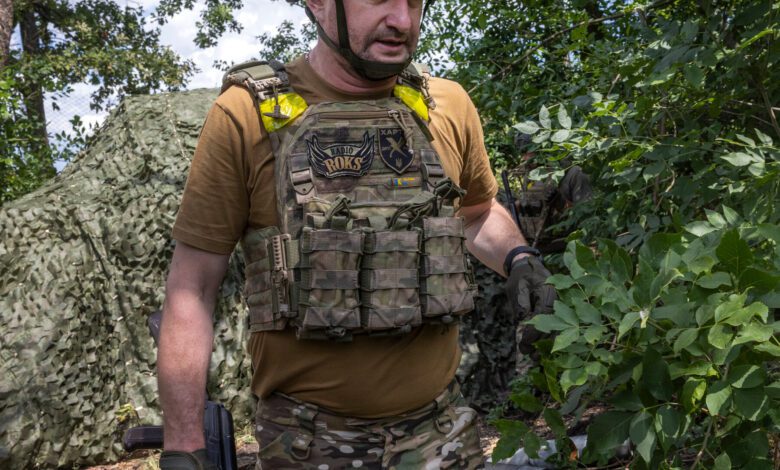
Ukrainian writer and musician Serhiy Zhadan joined the National Guard in 2024 while continuing to perform and read poetry behind the front. The Kharkiv artist’s dual role reflected how Russia’s invasion drew cultural figures into military service while art remained part of civilian endurance.
Zhadan was established before the war
He had published poetry and novels for decades and fronted the rock band Zhadan i Sobaky. His work often centred eastern Ukrainian cities, border identities and lives transformed after the Soviet period.
That background made his voice influential beyond celebrity alone.
Kharkiv shaped his public role
Zhadan lived in a city repeatedly attacked because of its proximity to Russia. Since 2014, he had organized cultural work and assistance for communities affected by war in the east.
His public identity joined Ukrainian language and culture with a region Russia claimed to represent.
He entered a local National Guard unit
After training, Zhadan served with the Khartia brigade. Military duties placed him near the front, although articles needed to avoid publishing operational details that could endanger personnel.
His enlistment was voluntary and should not be generalized to every artist.
Performances continued behind the lines
He filled halls for poetry and played major festival sets during the summer. Concerts raised morale and sometimes supported fundraising for military or humanitarian needs.
Audiences could experience grief, anger and ordinary cultural life together.
Art documented more than propaganda
Wartime culture can rally national resistance, but serious literature also preserves ambiguity, loss and individual experience. Treating every work only as a political instrument diminishes its artistic value.
Readers should distinguish the artist’s own statements from interpretations imposed by admirers or critics.
Service created ethical tensions
A soldier who is also a journalist or artist may possess access and influence, while military secrecy limits what can be shared. Celebrity can draw attention to a unit but also distort perceptions of ordinary service.
Responsible profiles explain those limits rather than romanticize combat.
Ukraine’s cultural survival was contested
Russia attacked cultural sites and denied aspects of Ukrainian nationhood, making language, books and music part of resistance. Artists also debated mobilization, censorship and who had the right to speak for the country.
Pluralism remained important even during an existential defence.
Zhadan embodied overlapping forms of duty
His writing gave voice to eastern Ukraine; his aid and military service acted directly in its defence; his performances helped communities gather under threat. None made war glamorous.
The power of the story lay in continuity: a poet did not stop being an artist when he became a soldier. He carried culture into a war that was also about whether that culture could survive.
Readers should avoid treating his enlistment as proof that cultural workers who chose evacuation, caregiving or civilian service were less committed. Wartime societies depend on many forms of labour. Zhadan’s particular decision mattered because it joined his established public work to a military unit, not because it established a universal duty for artists. His later writing would provide its own record of what that choice meant.



