
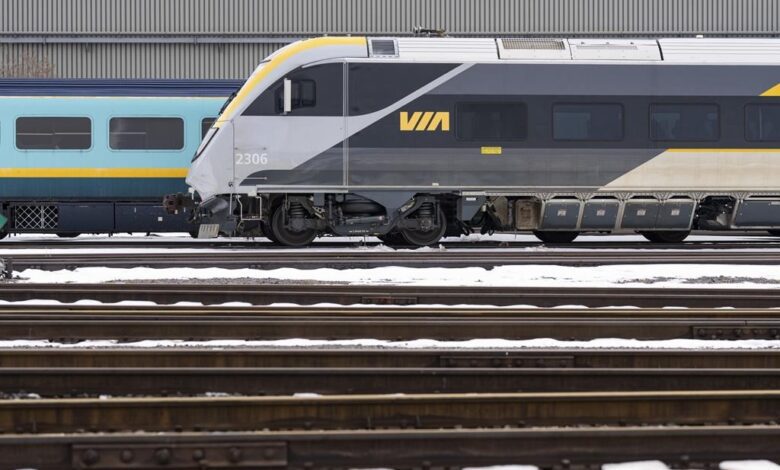
Via Rail president and chief executive Mario Péloquin acknowledged in September 2024 that persistent delays on the Ocean, the passenger service linking Montreal and Halifax, were the “elephant in the room” as the Crown corporation prepared to replace its aging long-distance fleet.
Via owns little of the track it uses
Péloquin said Via owned only about three per cent of the rail network on which it operated nationally. Most Ocean trains run over infrastructure controlled by Canadian National Railway, where freight traffic and the condition or layout of tracks influence passenger schedules.
Ownership limits Via’s direct control but does not remove its responsibility to communicate and plan realistic service.
Freight and passenger needs differ
Passenger trains benefit from higher speeds, reliable sidings and priority through congested segments. CN said it financed its own network and that agreements must reflect the extra maintenance or improvements required by passenger operations.
Via and CN therefore needed a funded operating arrangement, not simply public blame.
A New Brunswick section was a concern
Passenger advocate Ted Bartlett identified the route between Campbellton and Moncton as a particular obstacle, citing deteriorated track and removed sidings. Freight trains may tolerate conditions that make a competitive passenger timetable difficult.
Restoring capacity could require federal leadership because the public benefit extends beyond either corporation’s commercial interest.
The Ocean still brought visitors
Péloquin said about 13,000 passengers reached Halifax on the service each year and argued that demand could grow. The train offers connections among communities and a lower-emission alternative to some car or air journeys.
Environmental potential depends on occupancy, frequency and a schedule travellers can trust.
The equipment was exceptionally old
Via said its non-corridor fleet averaged roughly 77 years of age. Ottawa’s 2024 budget committed funding to replace trains outside the Quebec City–Windsor corridor, although it withheld the procurement value before international bidding.
Keeping the budget confidential during competition can protect negotiating leverage.
New trains alone cannot repair punctuality
Modern cars may improve accessibility, comfort, reliability and energy use, but they still travel on the same shared route. Infrastructure, dispatching priority and recovery time must be addressed alongside rolling stock.
Marketing an upgraded train without fixing the timetable would leave the central complaint unresolved.
Modernization needs measurable commitments
Via should publish on-time performance using a consistent definition, causes of delay, cancellations and passenger compensation. Targets for accessibility, travel time and service frequency would allow Atlantic Canadians to judge progress.
Aggregate transparency need not reveal commercially sensitive contract details.
The route is a public-policy choice
Long-distance passenger rail rarely can be evaluated only through fare revenue. Governments also consider mobility for smaller communities, tourism, accessibility, climate goals and national connectivity.
The honest question is what service Canada wants and what infrastructure it will fund to deliver it. Péloquin’s admission was valuable because it separated an attractive 2030 vision from present performance. Replacing old trains is necessary, but a credible Ocean also requires enforceable access, suitable track, reliable information during disruption and a timetable built around passengers rather than chronic delay.



