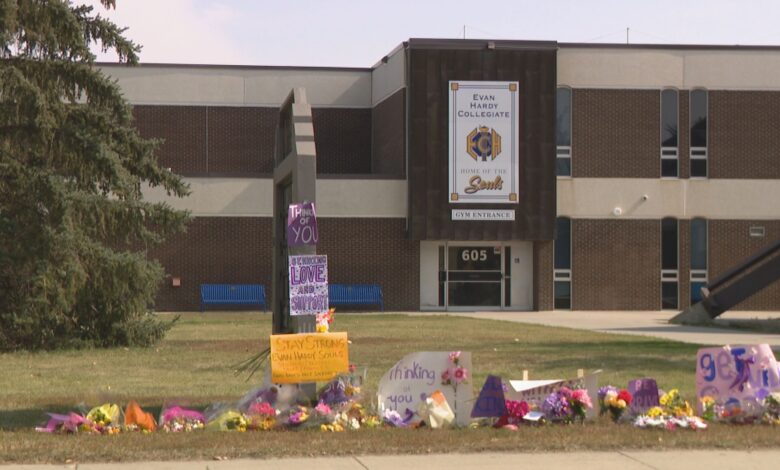
Saskatchewan prosecutors said they would seek an adult sentence for a 14-year-old girl accused in a serious attack at Evan Hardy Collegiate in Saskatoon. The step did not make the youth an adult or establish guilt; it began a legal process governed by Canada’s Youth Criminal Justice Act.
The allegation involved a student set on fire
Emergency responders attended the school on September 5, 2024 after a 15-year-old student was seriously injured. Police arrested another student and laid charges including attempted murder, aggravated assault and arson.
Charges are allegations. The accused was entitled to the presumption of innocence and to a fair trial, and reporting restrictions protect the identities of young people involved.
An adult sentence is not the same as an adult trial
Canadian youth cases normally remain in youth court even when the Crown applies for an adult sentence. The court first determines guilt under the ordinary criminal standard.
If there is a conviction, a judge considers the application separately. Describing the Crown’s notice as proof that the teenager had already been “tried as an adult” would be inaccurate.
The legal threshold is demanding
For certain serious offences committed by a youth aged at least 14, prosecutors may ask the court to impose the sentence available to an adult. Provincial rules and the precise offence affect eligibility.
The Crown must persuade the court that the presumption of diminished moral blameworthiness for young people has been rebutted and that a youth sentence would not be long enough to hold the person accountable.
Age remains central to sentencing
The youth-justice system recognizes that adolescents have developing judgment, greater susceptibility to pressure and a strong capacity for rehabilitation. Those principles do not minimize the harm suffered by a victim.
A judge must balance accountability, protection of the public and the young person’s circumstances using evidence rather than community anger.
Mental health may require careful evidence
Any claim about a young person’s diagnosis, intent or competence should come from admissible professional assessment, not social-media speculation. Different legal questions apply to fitness for trial, criminal responsibility and sentencing.
Privacy is especially important because unsupported labels can follow a child permanently and can stigmatize others with mental illness who are not violent.
The injured student’s needs remain important
Serious burns can require surgery, rehabilitation and long psychological recovery. Family members and classmates may also need trauma support.
Victim services and school resources should continue independently of how long the court process takes. Avoiding names and graphic images protects dignity without overlooking the severity of the allegation.
Schools must review prevention and response
Administrators can assess supervision, emergency communication, access to hazardous materials and support for students who report threats. A review should not assume every rare act could have been predicted.
Transparent lessons can improve preparedness while respecting the confidentiality of students and staff.
The court, not headlines, decides the outcome
The Crown’s application signalled that prosecutors regarded the alleged conduct as exceptionally serious. Defence counsel could challenge the evidence and argue that youth measures remained appropriate.
Until judgment, careful reporting should distinguish allegations, applications and findings. That protects the accused’s legal rights, the victim’s dignity and public understanding of a difficult case.