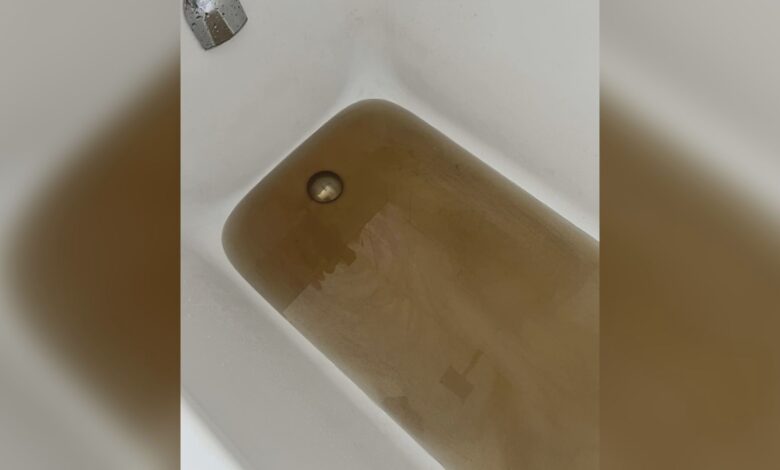
Residents served by West Kelowna’s Rose Valley water system reported brown colour, unpleasant odour and bad taste after the city’s new treatment plant entered full operation in 2024. Families said they bought bottled water and replaced filters while asking why a costly facility had not yet delivered consistently acceptable tap water.
The plant was a major municipal project
The Rose Valley Water Treatment Plant was built for roughly $75 million and celebrated at an official opening in May 2024. It brought several neighbourhood water systems together and was designed to improve treatment for thousands of residents.
A modern plant can still encounter distribution-system problems during commissioning and operational adjustments.
Residents described recurring discolouration
People in Rose Valley and West Kelowna Estates showed water that appeared yellow or brown and said the problem lasted for weeks. Some continued using it for bathing but stopped drinking it because of taste and smell.
Individual observations establish a service problem but cannot identify the contaminant or health risk without testing.
The city pointed to manganese
West Kelowna said it added a chemical oxidant to help remove manganese and that the adjustment was working. Manganese occurs naturally in water and can create colour, deposits and taste complaints when treatment or changing flow conditions mobilize it.
Residents still needed timely laboratory results and clear instructions rather than reassurance alone.
Appearance and safety are separate questions
Discoloured water is not automatically unsafe, and clear water is not proof that every parameter meets a standard. Utilities determine potability through sampling for microbial, chemical and physical indicators and through applicable health guidance.
People should follow current municipal or health-authority notices, especially when preparing infant formula or managing a medical vulnerability.
Boiling is not a universal solution
Boiling can inactivate many microbes when an official boil-water notice is issued, but it does not remove dissolved metals and may concentrate some non-volatile substances. Filters also differ in what they can remove and require correct maintenance.
The appropriate response depends on the identified problem, so generic social-media advice can be unsafe.
Cost intensified frustration
Residents questioned monthly water charges and the debt associated with the new facility while paying for bottled water or filters. One resident told reporters her household’s combined cost was about $200 a month.
That personal figure should not be presented as the standard bill for every customer, but it illustrated the burden perceived by affected families.
Distribution flushing and communication mattered
When a treatment process changes, utilities may need to flush mains, manage pressure and monitor deposits throughout the network. Publishing neighbourhood sampling maps, complaint volumes, corrective work and expected timelines would allow customers to see whether conditions improved.
Instructions should also explain how to document property damage or request investigation.
Trust depends on measurable performance
The central issue was not whether residents appreciated long-term infrastructure investment; it was whether safe, acceptable water reached their taps. The city needed to identify causes, meet health standards and communicate uncertainty plainly.
Independent testing and transparent results could distinguish aesthetic problems from health concerns and show whether the oxidant adjustment solved them. Residents were entitled to evidence that the system they funded was operating as designed, while technical staff needed enough time and data to correct a complex network without making promises the measurements could not support.