These Robots Are Making Meals for a Nonprofit in San Francisco’s Tenderloin

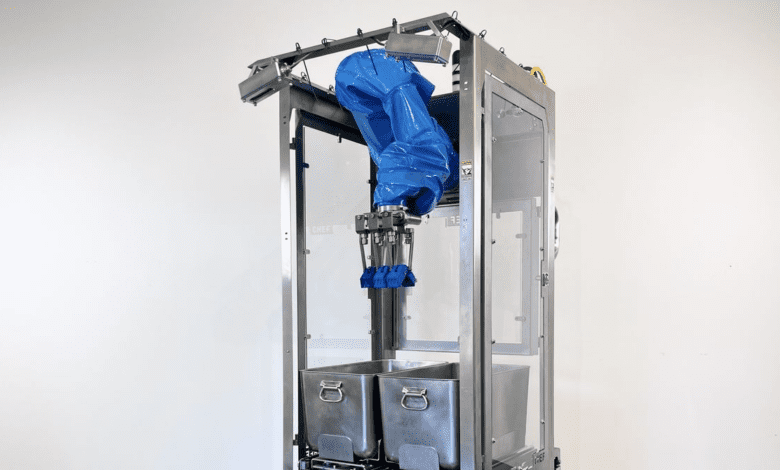
Two robotic arms are helping Project Open Hand assemble medically tailored meals in San Francisco’s Tenderloin district. The machines plate prepared food; they do not design diets, cook meals or replace the staff responsible for nutrition, food safety and quality control.
Project Open Hand began during the AIDS crisis in 1985 and now prepares food for people managing serious health conditions. A medically tailored meal can differ by calorie, protein, sodium, texture, allergy and other requirements, so accurate assembly matters as much as speed.
What the robots actually do
The arms operate for part of the day beside a conveyor line. Interchangeable tools scoop and place prepared ingredients into specified tray compartments. Chef Robotics says the system can work with dozens of foods of different shapes and textures. Humans still cook and chop ingredients, load the line, inspect portions, wipe spills, seal trays and organise delivery.
That division of labour is important because “AI robot chef” suggests a more independent machine than the one in use. The system performs a narrow, repeatable plating task under human supervision. It can vary its motion for an ingredient, but it remains part of a controlled production process.
Why a nonprofit considered automation
Project Open Hand has historically depended on volunteers as well as paid staff. The organisation said it had difficulty finding enough people for repetitive meal-assembly shifts, particularly after pandemic-era changes reduced corporate volunteer participation. Its stated reason for renting the robots was therefore capacity, not a plan to eliminate existing kitchen jobs.
The financial calculation is not limited to hourly speed. Consistent portions can reduce waste and make nutritional targets easier to meet, while the subscription, maintenance, cleaning and integration costs work in the opposite direction. A nonprofit also has to decide whether a technology purchase supports its mission better than hiring, training or volunteer recruitment.
Where human oversight remains essential
Food is irregular. A scoop can stick, a soft item can break and an ingredient can land outside its compartment. Staff have to notice those failures before a tray reaches a client. Humans also manage allergen separation, sanitation, temperature control and changes to an individual meal plan—areas where a plating arm should not be treated as the final authority.
Privacy is another boundary. Health-related meal categories should be handled so that robotics and production data do not expose more client information than necessary. The safest design gives the machine the portioning instructions it needs without turning a kitchen tool into an unnecessary store of medical records.
A practical test of value
The project should be judged by meals completed accurately, staff and volunteer time saved, food waste, downtime, safety incidents and total cost. Novelty alone is not evidence that automation helps. In this case, the technology is most useful if it absorbs a difficult-to-fill repetitive task while leaving people in control of care, judgement and accountability.
The trial can also show whether the system remains useful when menus change. A robot that performs well with one scoopable ingredient may need different tooling, calibration or human assistance for another. Publishing results across a representative menu would give donors and other meal providers a better basis for deciding whether the approach is transferable.
Sources: Project Open Hand; Chef Robotics.