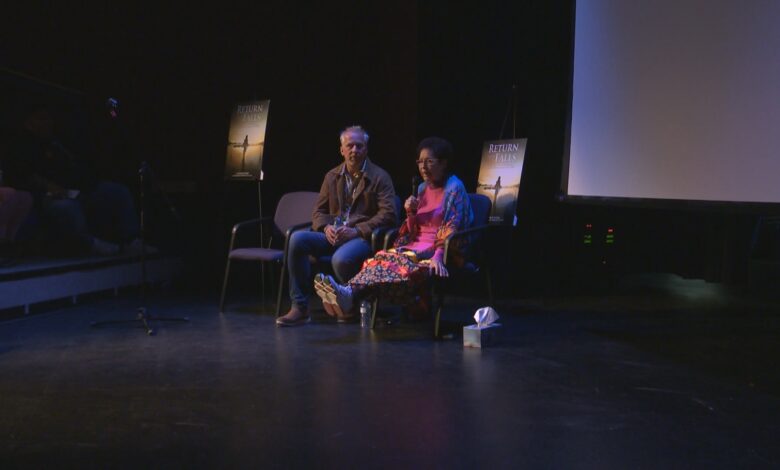
The documentary Return to the Falls follows Cree Elder Betty Ross as she revisits the experiences that shaped her survival of Canada’s residential-school system. Screenings in Alberta classrooms before the 2024 National Day for Truth and Reconciliation used her own testimony to connect history with a living person.
Ross was taken to residential school as a child
Ross, from Pimicikamak Cree Nation, described being abandoned, adopted and then taken to St. Joseph’s residential school when she was eight. The separation exposed her to a system designed to remove Indigenous children from family, language and culture.
Her memories belong to her and should not be reduced to a generic account. Survivor-led storytelling allows people to determine what they disclose, how it is framed and what healing means to them.
Her father’s teachings became a source of strength
The film presents sacred teachings from Ross’s father as a sustaining force through trauma. The falls of the title carry personal and spiritual significance, becoming a place to which she returns after more than 70 years.
That return does not imply that revisiting a location automatically resolves harm. It represents one step within the continuing journey Ross chose to share.
A graphic novel helped begin the film project
Ross’s childhood story had appeared in the graphic novel Sugar Falls. After encountering the book through his daughter, Alberta filmmaker Eppo Eerkes sought to find the woman readers knew as “Little Betty.”
Ross later decided she was ready to participate. Consent was especially important because residential-school institutions had denied Indigenous children control over their lives and stories.
The production combines testimony and dramatization
The docudrama uses contemporary footage of Ross alongside cinematic reenactments of childhood experiences. This form can make history accessible to students while creating a responsibility to distinguish reconstructed scenes from archival record.
The emotional power of an enactment should support the survivor’s account, not sensationalize violence. Classroom preparation and discussion can help young audiences process the subject safely.
Residential schools were part of a national system
For more than a century, the federal government funded schools largely operated by churches. Children endured forced separation, neglect, abuse and suppression of Indigenous identities, and many never returned to their families.
The Truth and Reconciliation Commission documented the system and issued 94 Calls to Action. Personal films add depth to that public record but do not replace institutional accountability.
Education begins with listening
Eerkes emphasized listening as the first responsibility, and Ross connected knowledge of the truth with any meaningful discussion of reconciliation. Their approach asks students to receive testimony before rushing to debate or solutions.
Listening also means respecting differences among survivors. People may choose public advocacy, private healing, anger, forgiveness or no engagement at all.
The documentary links resilience to continuing impact
Ross’s survival and leadership are not evidence that the system’s damage was overcome without cost. Residential-school policies continue to affect families through language loss, health inequities, child-welfare involvement and intergenerational trauma.
At the same time, Indigenous people are not defined only by harm. The film foregrounds teachings, strength, kinship and the authority to tell one’s own story.
A screening should lead to further work
Showing the film near September 30 can create a meaningful learning moment, but reconciliation cannot be confined to one day. Schools can study local treaty relationships, survivor testimony, the Calls to Action and present-day Indigenous governance throughout the year.
Return to the Falls offers an entry point grounded in Betty Ross’s voice. Its lasting value depends on whether viewers carry that listening into accurate education, respect for survivors and action by the institutions that inherited responsibilities from the residential-school system.