In Lebanon’s Bekaa Valley, Days of Destruction After Months of Calm
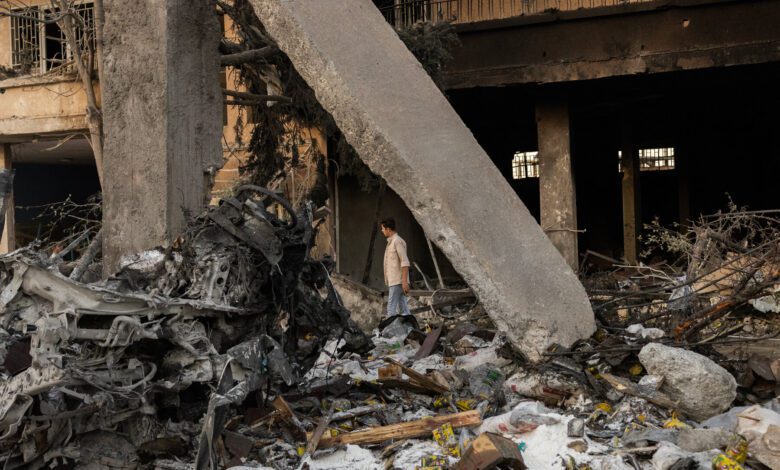
Israeli airstrikes brought sudden destruction to Lebanon’s Bekaa Valley in late September 2024 after months in which much of the region had remained outside the heaviest cross-border fighting. Families fled damaged towns as the conflict between Israel and Hezbollah expanded far beyond the southern frontier.
The Bekaa is a populated agricultural region
The broad valley runs between mountain ranges in eastern Lebanon and includes the historic city of Baalbek, villages, farms and routes toward Syria. It is not a single military site.
Hezbollah has a significant presence there and Israel said it was attacking weapons stores and other infrastructure. Civilians, homes and local services were also exposed to the consequences of the strikes.
September 23 marked a severe escalation
Lebanese authorities said Israeli attacks across the country killed hundreds on that day, making it Lebanon’s deadliest in decades. Israel said its air force struck about 1,600 Hezbollah targets in the south and Bekaa Valley.
The competing descriptions did not change the humanitarian reality: large numbers of people had little time to assess warnings, find transport or identify safe shelter.
Warnings could not guarantee safe evacuation
Israel issued messages telling residents to leave buildings where it alleged Hezbollah stored weapons. In dense or poor communities, recipients could not always know which structures were meant or where to go.
Road congestion, fuel costs, elderly relatives and fear of strikes along a route made evacuation difficult. A warning does not remove the legal obligation to distinguish military objectives from civilians and avoid disproportionate harm.
Hezbollah continued firing toward Israel
The Iran-backed group began regular attacks across the border on October 8, 2023, saying it was supporting Palestinians in Gaza. Its rockets and drones forced many residents of northern Israel from their homes and caused deaths and damage.
Israel said its campaign aimed to make the border safe enough for those residents to return. Hezbollah’s embedding of military activity around communities increased danger, but did not erase civilian protection under international humanitarian law.
Displacement strained Lebanon’s limited capacity
Families from the Bekaa, the south and Beirut’s suburbs sought rooms in schools, public buildings and relatives’ homes. Lebanon was already coping with prolonged economic collapse, weak public services and a large refugee population.
Municipalities and aid groups needed mattresses, food, medicine, sanitation and reliable registration. Repeated movement also separated children from school and adults from income.
Damage reached beyond the immediate blast
Broken roads, power lines, water systems and health facilities can make an area unsafe after an attack ends. Farmers risk losing crops and livestock when they cannot reach land or obtain fuel.
Unexploded ordnance and unstable buildings create longer-term hazards. Recovery requires technical surveys as well as visible debris removal.
The escalation threatened a wider regional war
Iran supported Hezbollah, while the United States supplied Israel and pursued diplomacy with France and other states. Strikes near routes to Syria raised concern that more actors could be drawn into the conflict.
A proposed temporary ceasefire was intended to create space for negotiations. Continued attacks made that opening increasingly fragile.
Civilian accounts require careful reporting
Immediate casualty totals often change as hospitals identify victims and rescuers reach rubble. Military claims about a target also require corroboration and should be attributed rather than stated as settled fact.
The Bekaa’s experience showed the human cost when a contained border confrontation becomes a national campaign. Accurate coverage must document both armed activity and the civilians whose communities became battlefields.