
Live Updates: Israel Launches Invasion Into Southern Lebanon
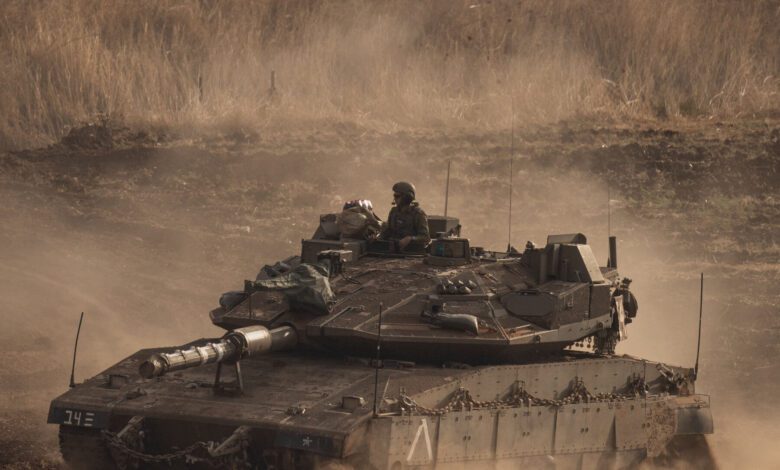
Israeli ground forces entered southern Lebanon around October 1, 2024, in what the military described as limited, localized operations against Hezbollah infrastructure near the border. The incursion expanded a conflict that had already displaced civilians on both sides and followed an intense Israeli air campaign and Hezbollah’s year-long rocket fire.
The border fighting began after October 7
Hezbollah started firing rockets into northern Israel on October 8, 2023, saying it was acting in support of Hamas and Palestinians in Gaza. Israel returned fire, and both sides exchanged attacks almost daily.
More than 60,000 residents of northern Israel were displaced, while tens of thousands fled southern Lebanon before the major September escalation.
September transformed the conflict
Exploding communications devices killed and injured people across Lebanon, and Israeli airstrikes intensified against Hezbollah personnel and weapons. An Israeli strike killed Hezbollah leader Hassan Nasrallah in Beirut on September 27.
Hezbollah continued launching rockets. The rapid sequence weakened its leadership but did not end its capacity to fight.
Israel defined the ground operation narrowly
The Israeli military said troops would target sites posing an immediate threat to northern communities. Some units had reportedly conducted cross-border raids before the formal announcement.
The word “limited” described Israel’s stated scope, not a guarantee about duration, casualties or geographic expansion. Ground wars can widen through resistance, reinforcement and shifting objectives.
Hezbollah resisted inside Lebanon
Fighters used villages, tunnels, anti-tank weapons and rockets against Israeli troops and territory. Israel said it found weapons and prepared positions near the border.
Military presence among civilian areas does not remove the attacking force’s duties of distinction, precaution and proportionality. Hezbollah likewise had obligations not to direct attacks at civilians.
Resolution 1701 remained the diplomatic framework
The UN resolution that ended the 2006 war called for Israeli withdrawal and for the area south of the Litani River to be free of armed personnel other than the Lebanese state and UN peacekeepers.
Its terms had never been fully implemented. Lebanon’s government said it was prepared to deploy the army, but the force’s resources and Hezbollah’s independent power limited enforcement.
Humanitarian harm grew rapidly
By early October, Lebanese authorities and aid agencies estimated that around one million people had been displaced. Airstrikes damaged homes and infrastructure far beyond the immediate border zone.
Casualty claims required attribution and changed as bodies were recovered. Civilians needed safe routes, shelter, medical care and protection regardless of political community.
A ceasefire began in November
Israel and Lebanon accepted a U.S.- and France-supported cessation of hostilities effective November 27. The plan envisioned Lebanese army deployment in the south, Hezbollah weapons moving away from the border and Israeli withdrawal during a transition.
Disputes and strikes continued after the agreement, showing that a ceasefire can reduce large-scale warfare without resolving every violation or territorial question.
The invasion did not offer a simple ending
Israel sought to return northern residents by removing nearby attack infrastructure; Hezbollah said it was resisting occupation and supporting Gaza. Neither rationale reduced the danger to Lebanese and Israeli civilians.
The completed chronology should replace the uncertainty of the live update: a stated limited incursion grew into weeks of ground fighting, accompanied by widespread airstrikes and displacement, before a negotiated ceasefire. Sustainable security requires implementation by accountable state institutions, protection of civilians and political resolution, because military control of a border zone alone cannot settle the conflicts that repeatedly remilitarize it.



