
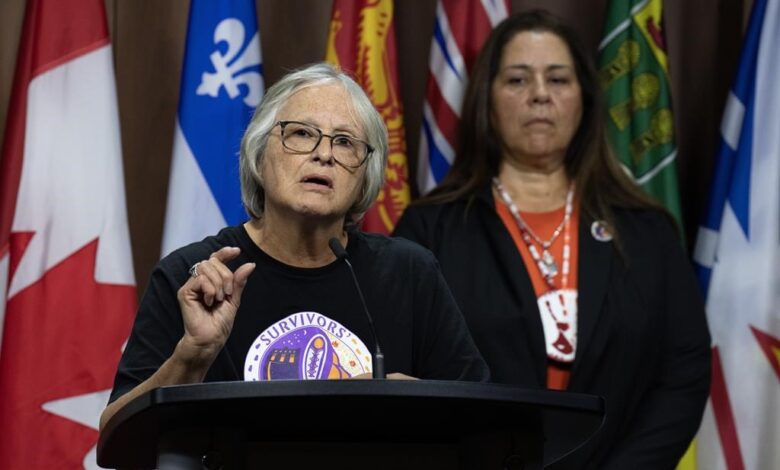
Residential-school survivors and community organizations used the National Day for Truth and Reconciliation in 2024 to press Ottawa for stable funding to identify missing children, search potential burial sites and preserve records. Their concern was not only the amount available, but whether short application cycles and changing rules could interrupt work that communities must lead at their own pace.
The support fund was created for Indigenous-led work
The Residential Schools Missing Children Community Support Fund finances archival research, field investigation, commemoration and related support. Communities decide whether, when and how to search because the sites concern their children, relatives, laws and cultural protocols.
A technical search is only one part of the work. Projects may need survivor interviews, document review, mapping, ceremonies, counselling, security and consultation about whether ground should ever be disturbed.
A proposed cap triggered opposition
In July 2024, federal administrators told recipients that requests would generally be limited to C$500,000 annually, below the previous maximum of C$3 million. Survivors and project leaders warned that the change could force staff layoffs, delay planned searches and leave records unfinished.
The federal government later withdrew the C$500,000 limit and removed other announced restrictions after hearing those concerns. That reversal restored flexibility, but it did not guarantee every proposal would receive its requested amount or provide permanent funding.
Budget totals did not answer local questions
Ottawa had committed more than C$116 million in 2021 and subsequently approved additional applications. Budget 2024 proposed C$91 million over two years for the fund. National totals can sound large while individual projects face specialized equipment, professional staff, travel, laboratory work and years of records analysis.
Survivor-led groups therefore sought predictable, multi-year arrangements rather than repeated uncertainty. Continuity also helps retain researchers and maintain trust with people disclosing traumatic experiences.
Careful language about search results matters
Ground-penetrating radar and other geophysical tools can identify subsurface anomalies consistent with possible graves. They do not by themselves identify a child or conclusively establish human remains.
Communities may combine radar findings with oral histories, school registers, maps and archival records. Some may choose excavation or forensic testing; others may decide that cultural law requires a site to remain undisturbed. Neither decision belongs to outside commentators.
The historical basis is already documented
Canada’s residential-school system separated Indigenous children from families, languages and cultures for more than a century. The Truth and Reconciliation Commission documented widespread abuse, neglect and thousands of deaths, while warning that incomplete and inconsistent records prevented a final count.
Current investigations refine knowledge about particular children and places. They are not the sole evidence that the system existed or caused profound harm.
Records access remains essential
Government departments, churches and archives hold documents created by institutions that controlled children’s lives. Communities have repeatedly sought complete, usable records without unnecessary delay or restrictions.
Digitization, name reconciliation and translation require resources. A box of scanned pages is not the same as an indexed record that families can search and interpret.
Search work also needs health support
Interviews and discoveries can intensify grief and trauma for survivors and relatives. Projects need culturally appropriate mental-health services, Elders and knowledge keepers alongside archaeological and archival expertise.
Public reporting should respect privacy and community decisions about what can be shared. Sensational claims can harm families, spread misinformation and interfere with careful investigation.
The demand was for a durable commitment
Removing the temporary cap addressed an immediate problem. Survivors’ broader message was that the search for missing children cannot depend on unstable annual negotiations or a political news cycle.
Responsible funding should be flexible, sufficiently long-term and accountable to the affected Indigenous communities. It should support truth, identification, commemoration and care without imposing a deadline on grief. The measure of progress is not money announced, but whether families can obtain answers through a process they control.



