
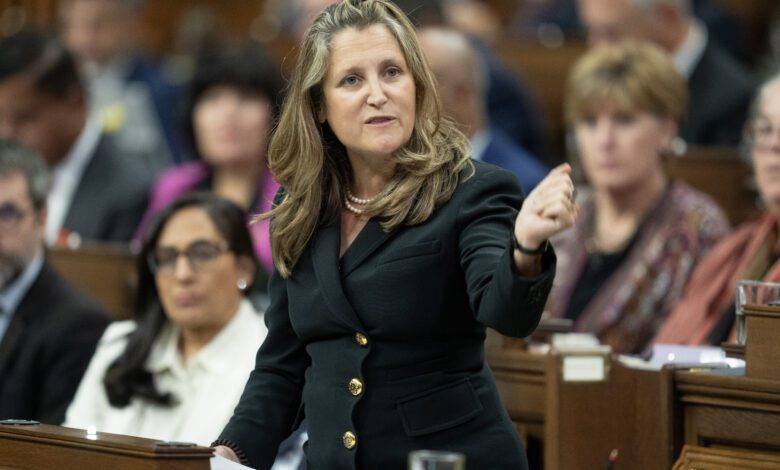
Canada’s House of Commons considered a government motion in October 2024 connected to proposed changes in the taxation of capital gains. The Liberal government treated the measure as a confidence question, raising the political stakes around a policy that was often inaccurately described as a simple increase in the capital-gains tax rate.
The proposal changed the taxable share of a gain
A capital gain is generally the increase in value realized when an asset is sold. The inclusion rate determines how much of that gain enters taxable income; the taxpayer’s applicable income-tax rate is then applied.
The 2024 proposal would have increased the inclusion rate from one-half to two-thirds for corporations and trusts. For individuals, the higher rate would have applied only to the portion of annual gains above C$250,000, with the first C$250,000 remaining at one-half.
Not every asset or sale was treated alike
Gains on a person’s principal residence are ordinarily exempt when the legal conditions are met. Registered savings arrangements also have their own tax treatment. Investment property, shares held outside registered accounts and business assets can produce taxable gains.
The threshold applied to gains, not sale proceeds. Selling an asset for C$500,000 did not automatically mean a C$500,000 capital gain because acquisition cost and eligible expenses also mattered.
The government framed the measure as fairness
The Liberals argued that the change would ask high-income individuals and corporations to contribute more while leaving most Canadians unaffected. Revenue was linked politically to spending priorities in the 2024 federal budget.
Critics said the measure could deter investment, complicate succession and affect entrepreneurs, professionals, property owners and family businesses. The real impact depended heavily on the type of asset, timing of a sale and access to exemptions.
A Ways and Means motion was not the final law
The vote concerned a parliamentary step allowing tax legislation to be introduced. It did not by itself complete every stage required for an amendment to the Income Tax Act.
Treating the vote as confidence meant defeat could have threatened the government’s survival. That political designation did not change the substantive tax calculation or remove the need for legislation.
Parliamentary support was issue-specific
The Conservatives opposed the increase, while the New Democratic Party and Bloc Québécois supported the motion. A party’s vote on this measure did not necessarily amount to endorsement of the government’s entire budget or future agenda.
Minority parliaments frequently produce such combinations. Confidence language can force opposition parties to decide whether disagreement on one issue justifies an election.
The proposed increase was later cancelled
The legislation was not enacted before Parliament was prorogued. In March 2025, Prime Minister Mark Carney announced that the government would cancel the proposed inclusion-rate increase.
That later decision is important for readers encountering the old report. The October 2024 vote was consequential at the time, but it should not be mistaken for the tax rules ultimately left in force.
Tax decisions require individual advice
Capital-gains calculations can involve adjusted cost base, losses, reserves, residency, trusts and special exemptions. A headline threshold cannot determine one person’s liability.
The accurate account is therefore narrower than the political slogans: the government sought a higher taxable share for corporations, trusts and individual gains above a substantial annual threshold; the Commons advanced the proposal in a confidence vote; and the increase was later abandoned before becoming permanent law. Anyone planning a transaction should use current Canada Revenue Agency guidance and qualified professional advice rather than a 2024 news report.



