UK’s Conservatives Are Surprisingly Upbeat at Their Party Conference
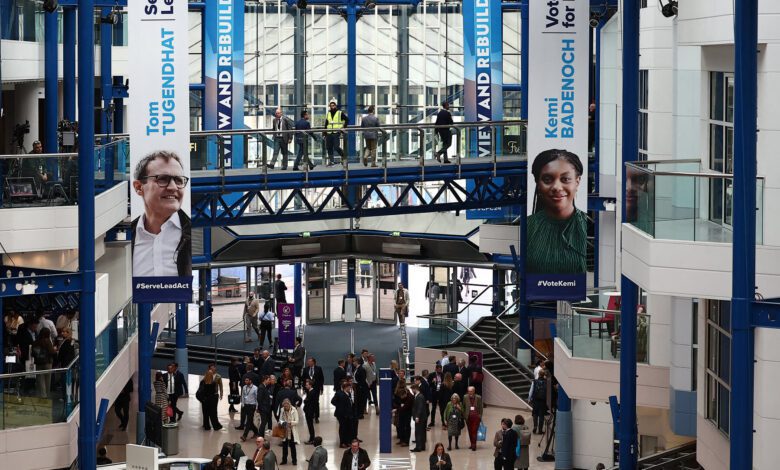
Britain’s Conservative Party gathered in Birmingham from September 29 to October 2, 2024, for its first annual conference after a historic general-election defeat. Instead of the despondency many expected, delegates turned the meeting into a competitive audition for the four remaining leadership candidates.
A leadership contest dominated the conference
Kemi Badenoch, James Cleverly, Robert Jenrick and Tom Tugendhat arrived as the candidates still seeking to replace Rishi Sunak. Conservative members could not yet choose between all four: party MPs would first reduce the field to two, with the membership then selecting the leader.
That structure made every speech and fringe event part of an internal campaign. Applause inside the hall measured enthusiasm among activists, not support among the electorate as a whole.
The scale of the defeat shaped every argument
The Conservatives had won only 121 of 650 House of Commons seats in July, their worst result in modern history, after governing since 2010. Labour secured a large parliamentary majority, while the Liberal Democrats displaced Conservatives in many southern constituencies and Reform UK drew votes on the right.
The party therefore faced more than a change of leader. It had to understand why former supporters stayed home, switched parties or concluded that public services and living standards had deteriorated under Conservative rule.
Four candidates offered different emphases
Jenrick emphasized immigration, the European Convention on Human Rights and a more explicitly right-wing programme. Badenoch presented herself as a direct cultural and economic conservative willing to challenge institutional consensus.
Cleverly stressed communication, unity and his experience in senior government roles. Tugendhat, a former security minister, highlighted public service and national security. Their positions sometimes overlapped, but their tone and route back to power differed.
Optimism had an organizational purpose
Conference delegates are among a party’s most committed participants. Enthusiasm helps recruit volunteers, raise money and sustain local associations after defeat. The upbeat atmosphere therefore said something real about activist resilience, even if it could not demonstrate a national recovery.
Opposition also freed candidates to criticize the new Labour government without immediately carrying responsibility for every policy outcome. Early disputes over gifts, spending decisions and internal discipline gave Conservatives material for attack.
The contest produced a surprise final ballot
After conference, MPs eliminated Tugendhat. Cleverly then topped one parliamentary round but was unexpectedly knocked out in the next, leaving Badenoch and Jenrick for the membership vote.
Badenoch won the result announced on November 2, becoming party leader and leader of the opposition. That later outcome shows why conference reactions alone could not predict the parliamentary arithmetic.
A new leader could not erase the governing record
Changing leadership allowed the Conservatives to reset presentation and policy priorities. It did not remove public memories of political instability, high inflation, strained services or the rapid succession of prime ministers during the previous parliament.
A credible renewal required detailed proposals, scrutiny of past failures and a coalition broad enough to compete with Labour, the Liberal Democrats and Reform UK in very different constituencies.
The mood was real, but the test lay outside Birmingham
The 2024 conference demonstrated that the Conservative organization retained energy and that leadership competition could attract attention after a devastating loss. It did not establish that voters had changed their judgment.
The party’s slogan of reviewing and rebuilding captured the genuine task. Internal confidence can begin a recovery, but election results depend on trust, competent opposition and policies that address people’s material concerns. The applause in Birmingham was a starting signal, not evidence that the reconstruction had already succeeded.