
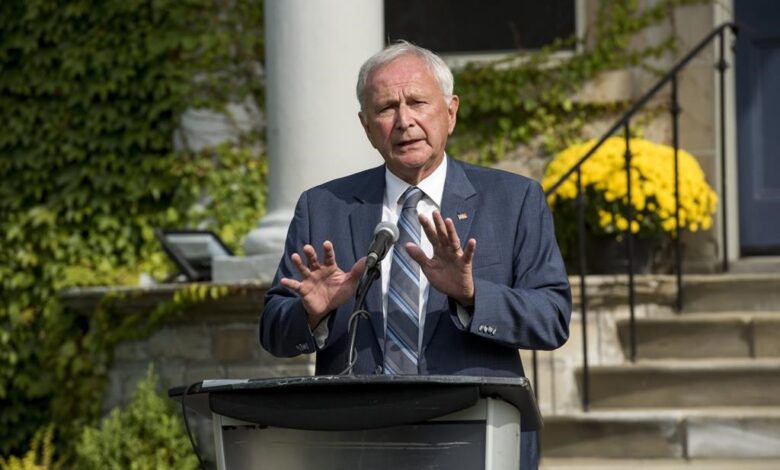
New Brunswick’s Policy 713 returned to the centre of the provincial election campaign in October 2024 after months of dispute over how schools should respond when a transgender or non-binary student asks to use a different name or pronouns. Progressive Conservative, Liberal and Green leaders offered sharply different approaches.
What the Higgs government had changed
In 2023, the Progressive Conservative government revised the education policy so that school staff required parental consent before formally using a chosen name or pronouns for a student under 16. The earlier policy had allowed staff to respect a student’s request without automatically informing a parent.
Premier Blaine Higgs framed the change as parental involvement. Child and Youth Advocate Kelly Lamrock and LGBTQ organizations warned that mandatory disclosure could expose a young person to rejection or abuse when home was not safe.
The positions during the campaign
PC advertisements said parents were the experts in raising their children and accused Liberal leader Susan Holt of excluding them. The party promised to retain its approach.
Holt’s Liberals and David Coon’s Greens said they would follow the child advocate’s recommendations. Their proposals allowed a capable student aged 12 or older to use a chosen name and pronouns informally at school without first obtaining parental consent, while encouraging safe family communication.
A small group became a large political symbol
Coon argued that the dispute concerned a relatively small number of students who did not yet feel safe telling their parents. Political scientist Jamie Gillies said reviving the issue late in the campaign could mobilize some voters but risked distracting from health care, education staffing and affordability.
Campaign material should not turn transgender children into abstractions. They are students seeking safety, privacy and participation, while parents also have legitimate interests in their children’s education and welfare. Policy must address the difficult cases where those interests conflict.
Rights and school practice
The Canadian Civil Liberties Association challenged the 2023 revision, alleging that it violated students’ Charter rights. A legal challenge tests lawfulness; it does not by itself decide the best way a teacher should support a particular child.
Good practice includes listening to the student, assessing capacity and risk, involving trained counsellors where appropriate, documenting a support plan and helping the young person speak with family when that can be done safely.
Voters changed the government
The October 21 election produced a Liberal majority: 31 seats for the Liberals, 16 for the Progressive Conservatives and two for the Greens. Holt became premier, while Higgs lost his own seat.
The result reflected many issues and cannot be treated as a referendum on one school policy. It did, however, give the new government authority to implement the change it had promised.
Policy 713 was revised again
In December 2024, the Holt government announced that students under 16 would no longer need parental consent for informal use of a chosen name or pronouns at school from January 1, 2025. Parental consent remained relevant to formal records, with procedures for support and communication.
After the revision, the civil-liberties group discontinued its court challenge. Ending the case did not remove the obligation to monitor how the policy works for students, parents and educators.
A standard beyond campaign slogans
The durable test is whether a policy protects a child from foreseeable harm, respects developing autonomy, encourages supportive family relationships and gives staff clear, lawful guidance. Neither “parents always know” nor “parents never need to know” resolves every circumstance.
The 2024 campaign showed how easily a small group of vulnerable students can become a wedge issue. Responsible reporting should explain the actual rules, later outcome and competing rights without repeating demeaning language or implying that a request for a name or pronoun is itself a threat.



