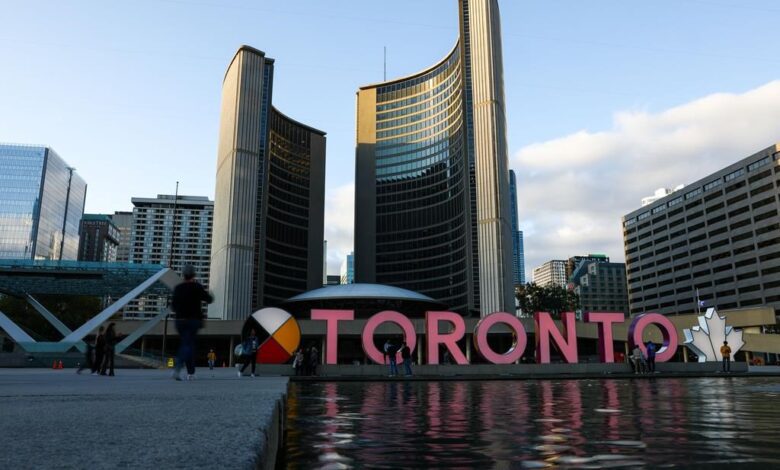
Toronto city council directed staff in October 2024 to examine a policy against misleading fossil-fuel advocacy advertisements on municipal property. The motion followed a similar Toronto Transit Commission decision and focused on greenwashing rather than imposing an immediate ban on every advertisement connected with oil or gas.
What council actually approved
The motion asked city staff to report in 2025 on declining fossil-fuel advocacy advertising unless it was consistent with Toronto’s TransformTO climate plan and its environmental claims were independently substantiated.
That was a study and policy-development direction, not an instant prohibition. Advertisements already remained subject to general city standards, contract terms and Canadian law.
The TTC had moved first
The transit commission had voted in September to require additional pre-screening of advocacy advertisements from Pathways Alliance and Canada Action. Proposed material would be reviewed for compliance before appearing on TTC vehicles or property.
Councillor Dianne Saxe, who advanced both initiatives, said the identified advertisements represented about 0.6 per cent of TTC advertising revenue. The small share weakened the argument that stronger review would create a major financial shock, although the legal and policy questions remained.
What greenwashing means
Greenwashing occurs when environmental claims are false, misleading, inadequately explained or unsupported. An advertisement may highlight a future emissions target while omitting material information about present production, scope or the conditions required to meet it.
The issue is the accuracy and overall impression of a claim, not the mere fact that an advertiser operates in a high-emitting industry. A policy that evaluates evidence is different from one that excludes a viewpoint solely because of the speaker’s identity.
Federal law had also changed
Amendments to the Competition Act in June 2024 placed additional requirements on environmental-benefit claims. Businesses needed adequate and proper testing or substantiation in accordance with internationally recognized methodology, depending on the kind of representation.
Industry groups argued that the wording was uncertain and could chill legitimate communication. Environmental organizations said the rules were necessary because ambitious claims had circulated without enough information for the public to test them.
Toronto’s later decision
City staff returned in 2025 with options. In July, council adopted a more limited approach rather than the proposed categorical ban: it ordered development of a greenwashing statement and a declaration that third-party advertisers would have to sign as a condition of using city assets.
Council also requested further reports on complaints, Competition Bureau responses and whether accepting advertising that promotes fossil-fuel combustion is consistent with TransformTO. The outcome showed that the 2024 “step toward a ban” remained a continuing policy process.
Standards should apply consistently
A credible advertising rule needs clear definitions, documented review, an appeal route and consistent treatment of claims from energy companies, governments, environmental groups and other advertisers. Selective scrutiny can undermine trust even when the initial concern is legitimate.
The city should also disclose how many ads are rejected, why they fail and whether revenue loss affects public services. Transparency helps distinguish fact-checking from political censorship.
The public-interest balance
Municipal assets are not an unlimited public forum, and Toronto can set conditions for commercial advertising. At the same time, restrictions must respect contractual and constitutional principles and should target demonstrably misleading content with proportionate rules.
The 2024 motion was best understood as an effort to align public property with climate commitments and federal truth-in-advertising standards. Its later implementation favoured declarations, information and continued review over an immediate blanket ban, leaving the city to prove that its process can catch deceptive claims without becoming an opaque test of acceptable opinion.