
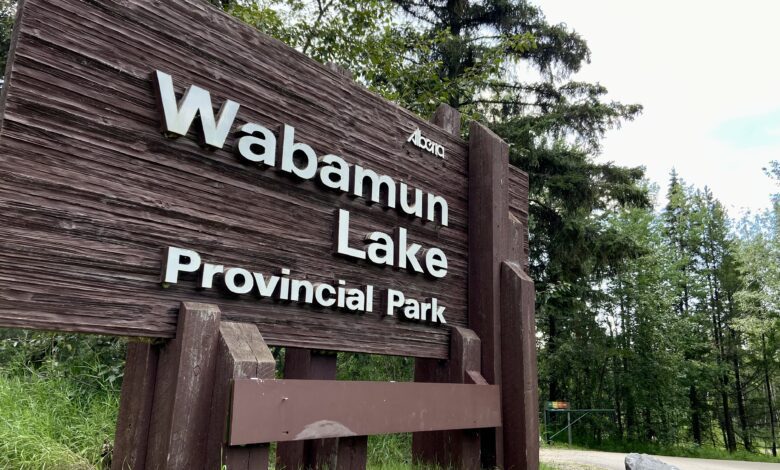
An emergency response at Wabamun Lake west of Edmonton was initially reported on October 13, 2024 as a capsized canoe or kayak. A five-year-old girl died after being recovered from the water. Subsequent police findings materially changed the account: the RCMP later said the canoe had not capsized and began treating the death as a criminal investigation.
The initial emergency response
Parkland RCMP received a call shortly before 3 p.m. near Moonlight Bay, roughly 70 kilometres west of Edmonton. Bystanders recovered the child and attempted to help until emergency crews arrived. STARS air ambulance was dispatched, but the girl did not survive.
A 35-year-old woman was also brought from the water by people in another boat. In the first hours, police said the use of personal flotation devices and the circumstances of the reported capsizing were under investigation.
Why the original description required correction
On October 17, RCMP said evidence showed that the canoe did not capsize. That statement made the early headline incomplete and demonstrated why information released during an active rescue should be treated as provisional.
The correction did not change the confirmed facts that a child was recovered from the lake, emergency services responded and the child died. It changed the presumed mechanism and removed the basis for presenting the event as a straightforward boating accident.
Charges followed
In November 2024, police charged Mary Quinn, then 35, with failing to provide the necessaries of life. In January 2025, a manslaughter charge was added. Court reporting in March 2025 said she had chosen trial by judge alone and that a preliminary hearing was scheduled.
A criminal charge is an allegation, not a finding of guilt. Quinn was entitled to the presumption of innocence, and the facts supporting the prosecution had to be tested in court. The child’s identity was protected by a publication ban and is not needed for the public to understand the case.
What should not be inferred
The public record cited here did not establish a final verdict or authorize a detailed reconstruction of the child’s last moments. Social-media claims, unnamed accounts and speculation about motive should not be substituted for evidence admitted in court.
It would also be misleading to use this case as proof that a flotation device caused or could certainly have prevented the death. General water-safety advice remains important, but the RCMP’s correction means the event cannot responsibly be reduced to an accidental capsize.
General safety still matters
Transport Canada advises people using small recreational craft to wear a properly fitted, approved lifejacket or personal flotation device. Operators should check weather and water temperature, avoid overloading, carry required safety equipment and ensure that children receive constant, close supervision around water.
Those measures reduce ordinary boating risk. They are presented here as general guidance, not as conclusions about conduct in this criminal case.
Accuracy in a developing story
Breaking-news reports often begin with a caller’s description before investigators have interviewed witnesses or examined physical evidence. Responsible updates should prominently correct the central premise instead of leaving an obsolete version to circulate indefinitely.
The most reliable account is therefore limited but clear: emergency crews responded to a child in Wabamun Lake; the child died; police later rejected the initial capsize description; and a woman faced charges that remained subject to due process. Anything beyond the verified record risks harming the family, prejudicing proceedings or misleading readers about what investigators actually established.



